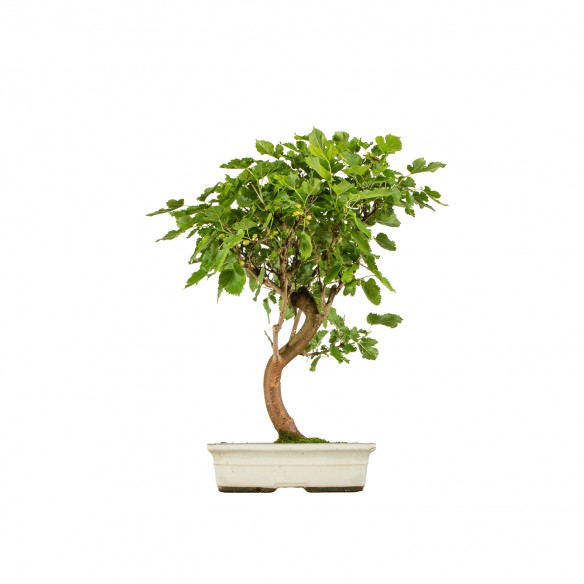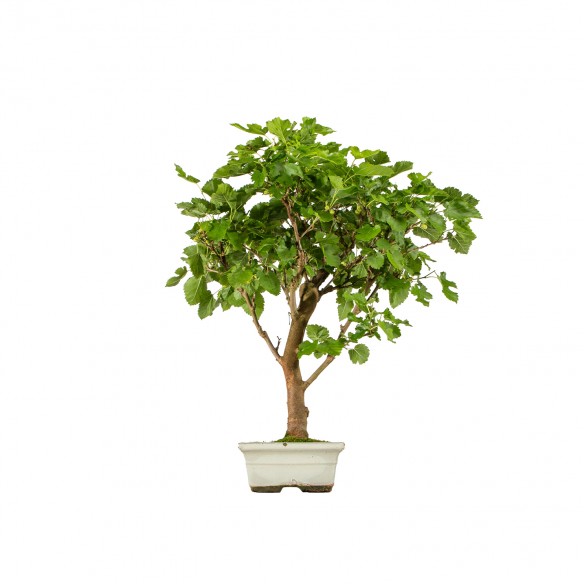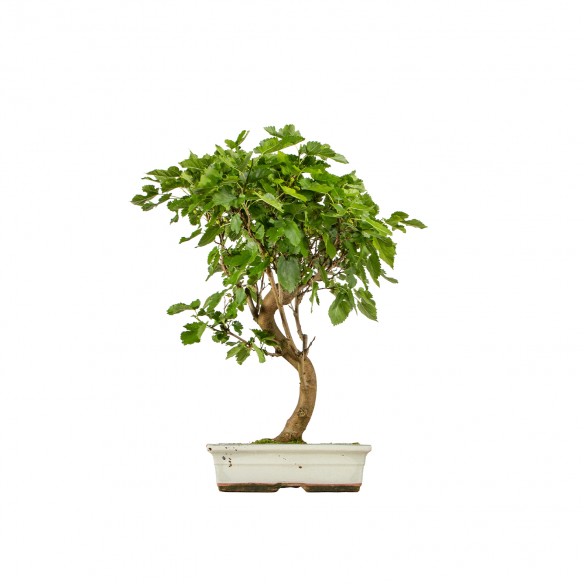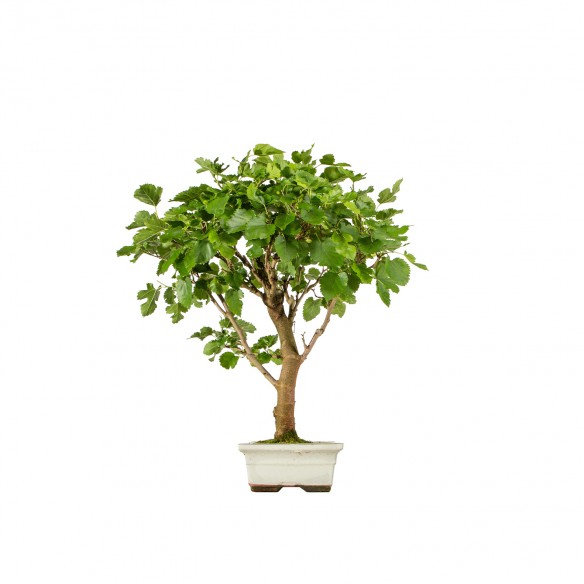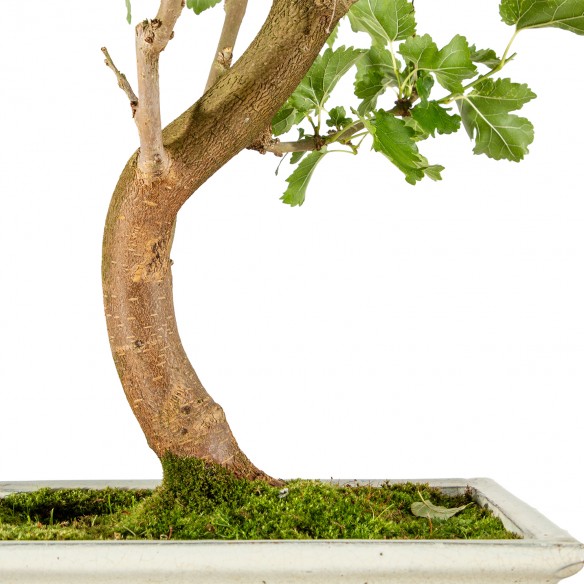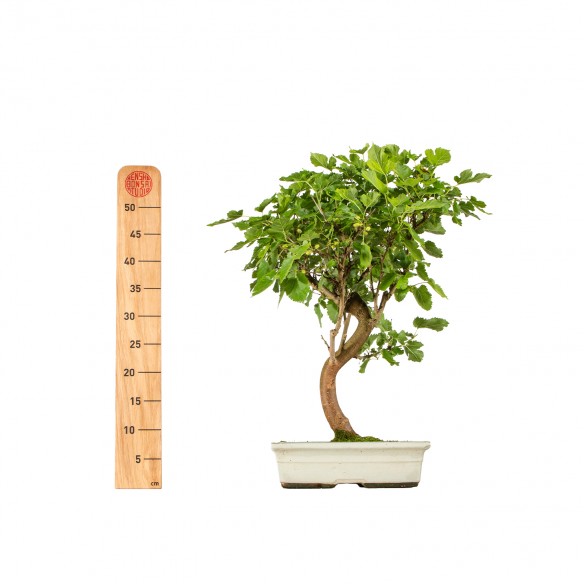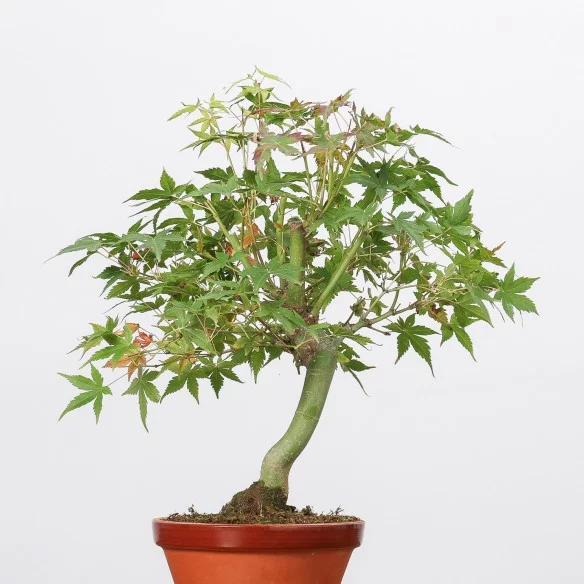
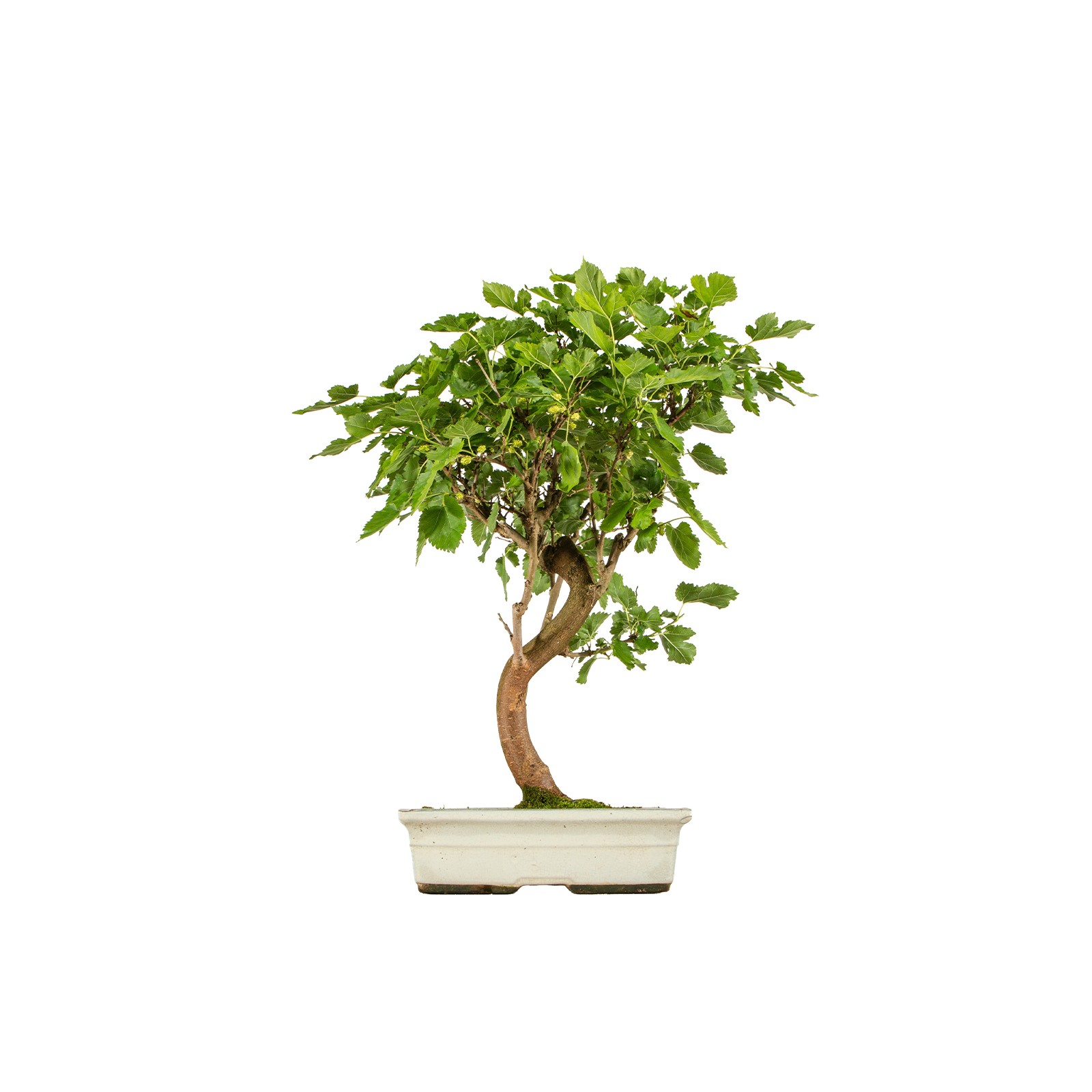


Native to Asia, Europe, and North America depending on the species, Morus spp. (mulberries) are deciduous trees appreciated in bonsai for their vigour, hardiness, and strong character. Leaf size ranges from medium to large, often with a coarse texture and irregular shape, giving the tree a bold, natural appearance. With time, mulberries develop interesting trunks, and their strong growth allows for effective structural development, making them well suited to informal and mature bonsai styles.
Light: Prefers full sun to partial shade. Good sun exposure promotes healthy growth and shorter internodes.
Watering: Requires regular watering, keeping the substrate slightly moist. Tolerates brief dryness better than prolonged waterlogging.
Humidity: Adapts well to normal environments. Misting is optional and mainly useful during very dry periods.
Pruning: Can be pruned in spring and summer to control vigour and encourage ramification. Responds very well to heavy pruning and readily buds from old wood.
Fertilization: Apply a balanced fertilizer throughout the active growing season. Can handle more generous feeding due to its strong growth.
Repotting: Every 2–3 years, in spring, using a well-drained substrate.
Flowering and Fruiting: Produces small, inconspicuous flowers in spring, followed by edible fruits in some species. In bonsai, the main ornamental value lies in the trunk, branch structure, and overall character.
Data sheet
Native to Asia, Europe, and North America depending on the species, Morus spp. (mulberries) are deciduous trees appreciated in bonsai for their vigour, hardiness, and strong character. Leaf size ranges from medium to large, often with a coarse texture and irregular shape, giving the tree a bold, natural appearance. With time, mulberries develop interesting trunks, and their strong growth allows for effective structural development, making them well suited to informal and mature bonsai styles.