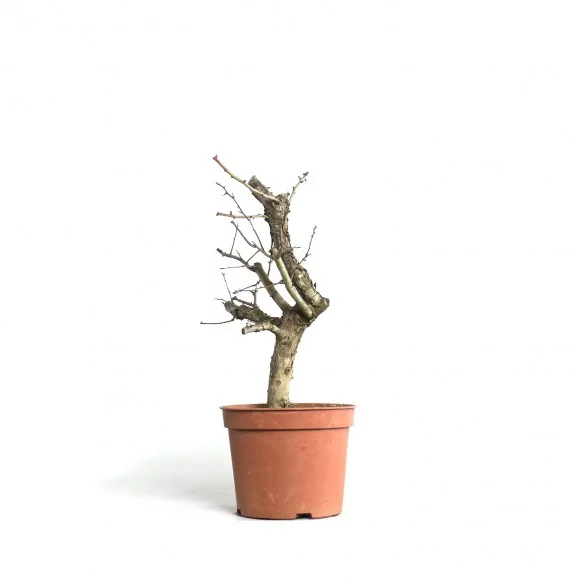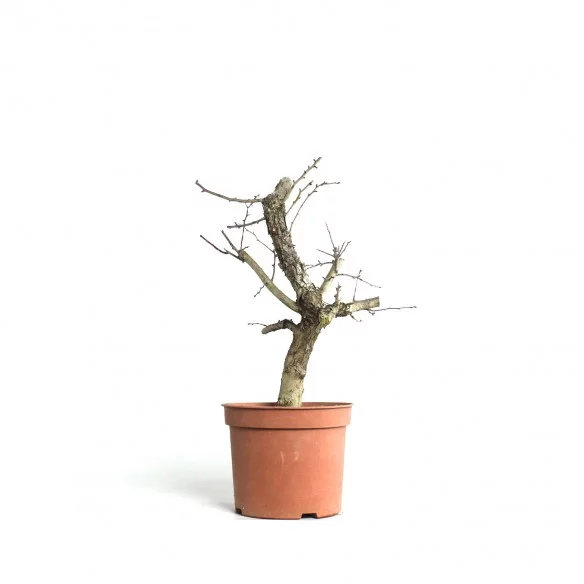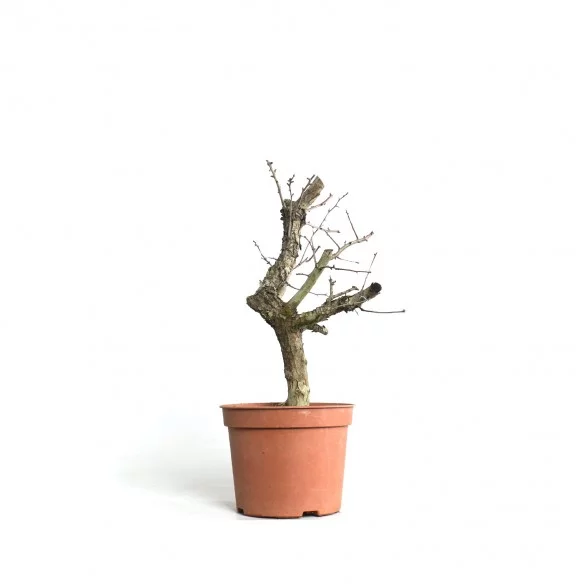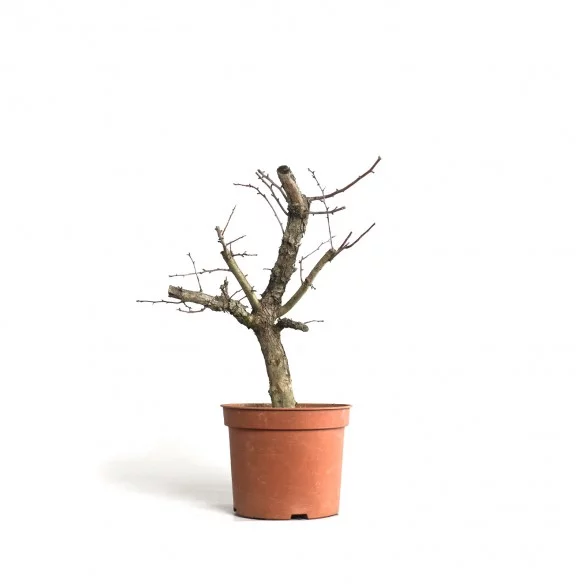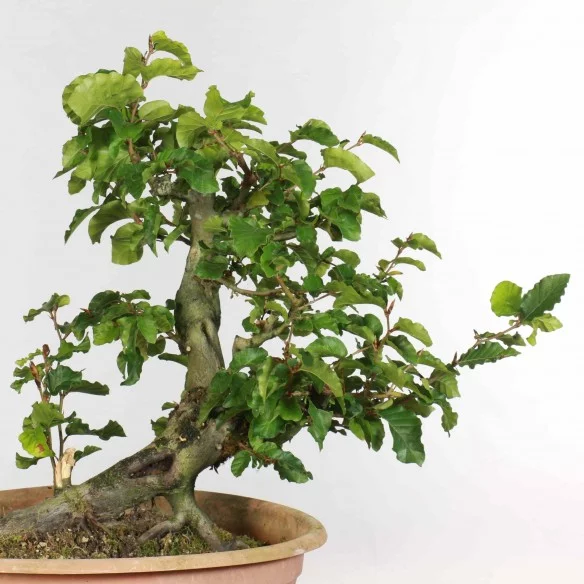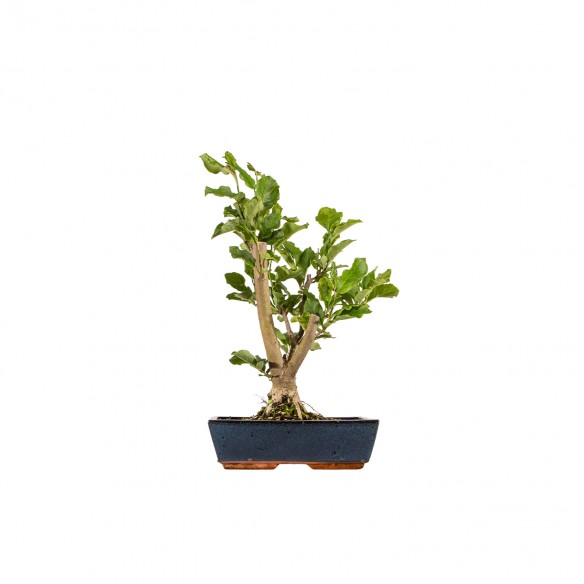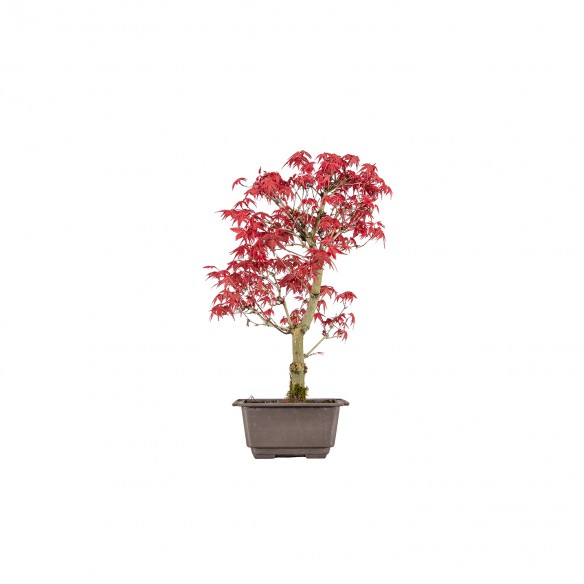


Native to Europe and parts of Western Asia, Crataegus monogyna, commonly known as Common Hawthorn, is a deciduous tree highly valued in bonsai for its resilience, dense foliage, and small white flowers in spring. The leaves are small, deeply lobed, and green in summer, turning yellow or reddish-orange in autumn. It produces small red berries in late summer, adding ornamental interest.
Sunlight: Prefers full sun, but tolerates partial shade. Direct exposure encourages abundant flowers and vibrant leaf colour.
Watering: Keep the soil slightly moist, avoiding waterlogging. More frequent watering may be needed in summer.
Humidity: Adapts well to varying humidity levels, benefiting from occasional misting in dry environments.
Pruning: Structural pruning can be done in late winter. Pinching during the growing season helps maintain shape and encourage fine branching.
Fertilization: Feed from spring to early autumn with a balanced fertiliser. Reduce feeding in late summer.
Repotting: Repot every 2–3 years in early spring using a well-draining soil mix (akadama, pumice, and some organic soil).
Flowering and Fruiting: Produces small white flowers in spring, followed by red berries that mature in autumn. The main ornamental value lies in the leaves, flowers, and fruit.
Data sheet
Native to Europe and parts of Western Asia, Crataegus monogyna, commonly known as Common Hawthorn, is a deciduous tree highly valued in bonsai for its resilience, dense foliage, and small white flowers in spring. The leaves are small, deeply lobed, and green in summer, turning yellow or reddish-orange in autumn. It produces small red berries in late summer, adding ornamental interest.