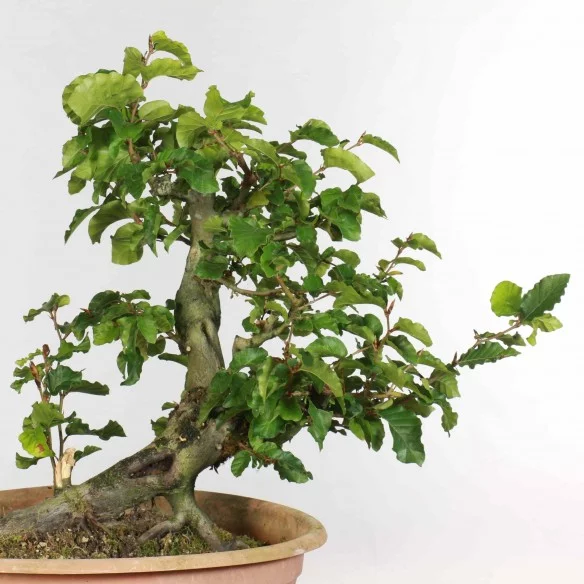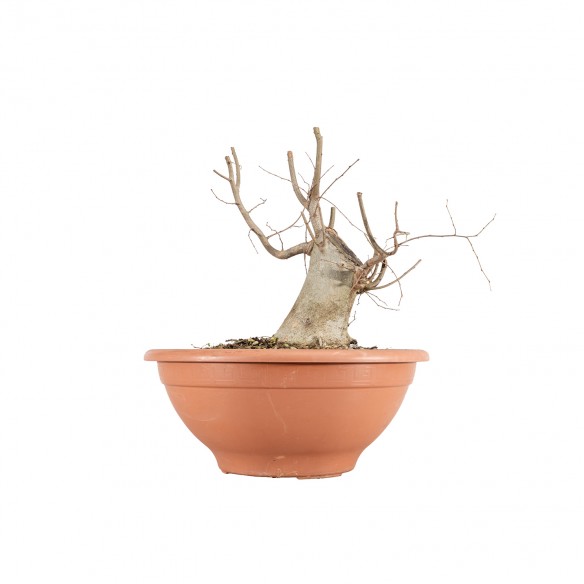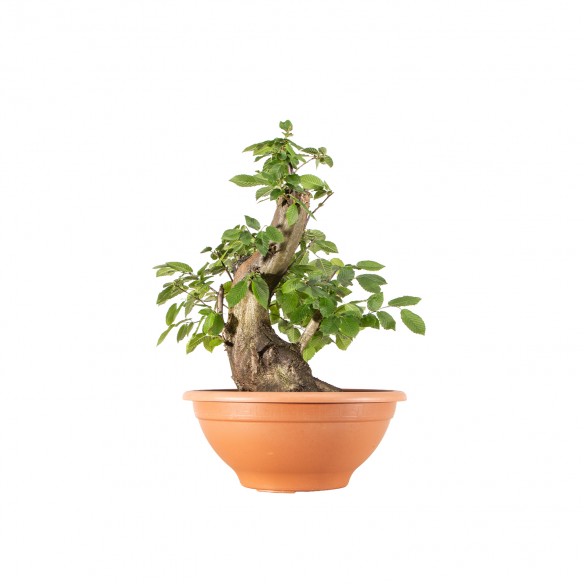


Native to East Asia, Celastrus orbiculatus, known as Oriental Bittersweet, is a deciduous climbing plant highly valued in bonsai for its resilience, vigorous growth, and striking seasonal appeal. Its rounded, glossy green leaves turn a bright yellow in autumn. In late summer and autumn, it produces yellow capsules that open to reveal bright red seeds, adding vibrant colour and visual interest.
Sunlight: Prefers full sun for vigorous growth and good fruiting, but can tolerate partial shade.
Watering: Keep the soil slightly moist but avoid waterlogging. Water more frequently in summer and reduce during winter dormancy.
Humidity: Adapts to a wide range of humidity levels but thrives in moderately humid environments.
Pruning: Prune after flowering or in late winter to control growth and encourage dense branching. It grows rapidly and requires regular pruning to maintain shape.
Fertilization: Feed during spring and summer with a balanced fertiliser. Reduce feeding in autumn and stop during winter.
Repotting: Repot every 2–3 years, preferably in early spring before new growth begins. Use a well-draining soil mix (akadama and pumice in equal parts).
Flowering and Fruiting: Small greenish flowers appear in late spring, followed by yellow capsules that open to reveal red seeds in autumn. The fruiting phase gives the tree strong ornamental value, especially in cooler months.
Data sheet
Native to East Asia, Celastrus orbiculatus, known as Oriental Bittersweet, is a deciduous climbing plant highly valued in bonsai for its resilience, vigorous growth, and striking seasonal appeal. Its rounded, glossy green leaves turn a bright yellow in autumn. In late summer and autumn, it produces yellow capsules that open to reveal bright red seeds, adding vibrant colour and visual interest.