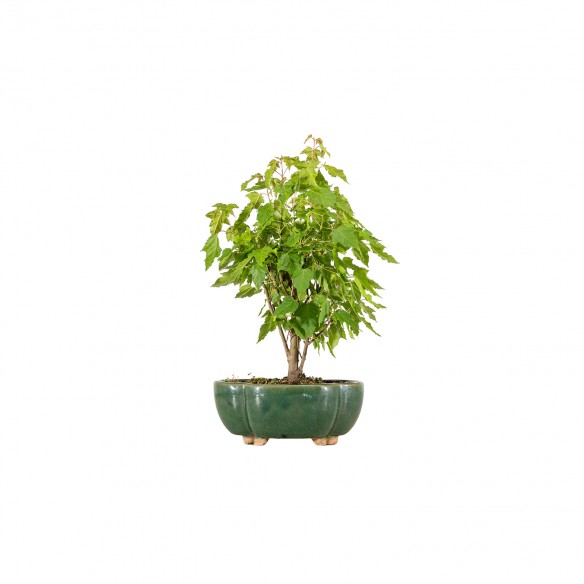


Native to Japan, Malus floribunda, known as Japanese Flowering Crabapple, is a deciduous tree highly valued in bonsai for its abundant flowering, small leaves, and ornamental fruits. Flowers bloom in shades of pink to white in late spring, creating a striking visual effect.
Sunlight: Prefers full sun to encourage abundant flowering. Can tolerate partial shade, but flowering will be less prolific.
Watering: Keep the soil slightly moist, avoiding waterlogging. Reduce watering in winter during dormancy.
Humidity: Prefers moderate humidity. Occasional foliar misting can be done, especially in dry climates.
Pruning: Can be pruned after flowering to remove unwanted branches, maintain shape, and encourage fine branching. Structural pruning should be done in late winter.
Fertilization: Feed from spring to early autumn with a balanced fertiliser, reducing feeding in late summer to prepare the tree for winter dormancy.
Repotting: Repot every 2–3 years, preferably in early spring, using a well-draining substrate (akadama, pumice, and sand mix).
Flowering and Fruiting: Produces small, abundant flowers in spring, followed by small decorative fruits. The main ornamental value lies in the exuberant flowering and compact tree shape.
Data sheet
Native to Japan, Malus floribunda, known as Japanese Flowering Crabapple, is a deciduous tree highly valued in bonsai for its abundant flowering, small leaves, and ornamental fruits. Flowers bloom in shades of pink to white in late spring, creating a striking visual effect.