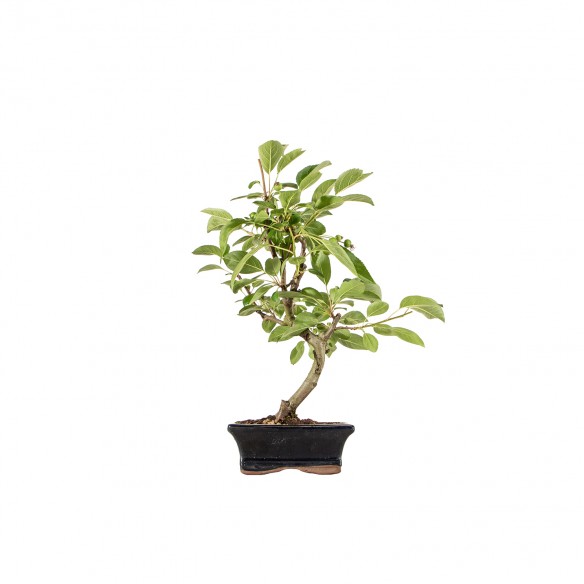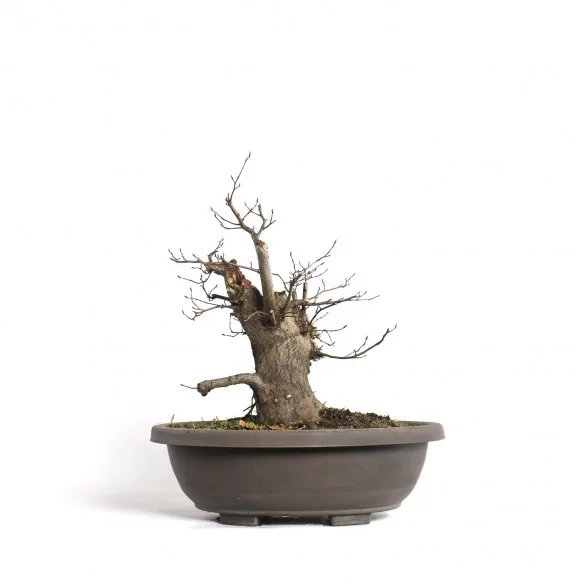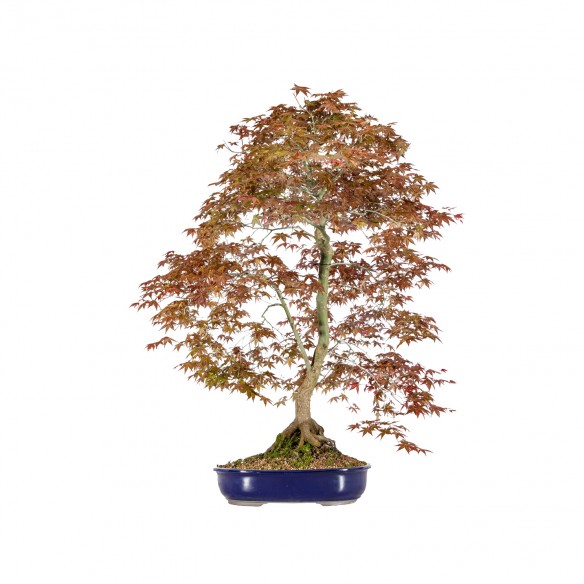


Originally from Asia, Morus spp. is one of the most appreciated species in the bonsai world for its abundant foliage and delicious fruits. The leaves, which can vary in size and shape, display different shades of green and, in some varieties, take on colours such as red or purple. The fruits, known as mulberries, are small, sweet, and can be eaten fresh or used in cooking. It is a fast-growing and resilient tree, qualities that make it ideal for bonsai cultivation.
Sunlight: Mulberry trees (Morus spp.) prefer full sun for healthy growth and fruiting. They can tolerate some shade, but fruit production tends to be lower.
Watering: The soil should be kept slightly moist, avoiding waterlogging. Allow the top layer of soil to dry between waterings. Mulberries are relatively more drought-tolerant than other fruit trees, but they benefit from regular watering, especially during hot or dry periods.
Humidity: They are not very demanding regarding air humidity, although they grow best in moderate levels. Humidity trays are not necessary unless the environment is very dry indoors.
Pruning: Pruning is essential to maintain shape, encourage branching, and ensure the tree’s vitality. Prune in winter to remove dead or diseased branches, and if needed, in late summer to control excessive growth.
Fertilization: During spring and summer, apply a balanced fertilizer, preferably water-soluble. Reduce or suspend fertilization in autumn and winter.
Repotting: Repot every 2 to 3 years, preferably in spring, before new growth begins. Use a well-draining substrate.
Fruiting: Mulberries produce sweet and tasty fruits that usually ripen in summer. Proper pruning and good sun exposure help increase fruit production.
Data sheet
Originally from Asia, Morus spp. is one of the most appreciated species in the bonsai world for its abundant foliage and delicious fruits. The leaves, which can vary in size and shape, display different shades of green and, in some varieties, take on colours such as red or purple. The fruits, known as mulberries, are small, sweet, and can be eaten fresh or used in cooking. It is a fast-growing and resilient tree, qualities that make it ideal for bonsai cultivation.