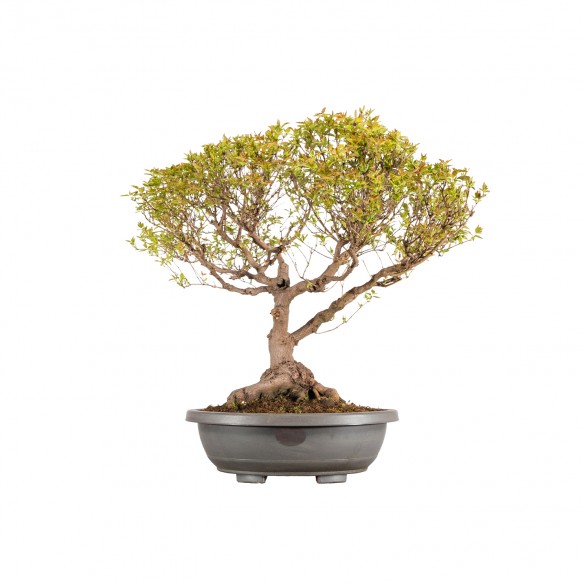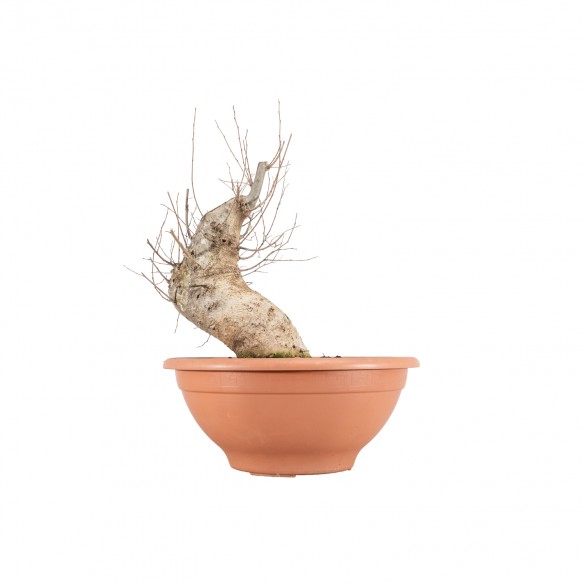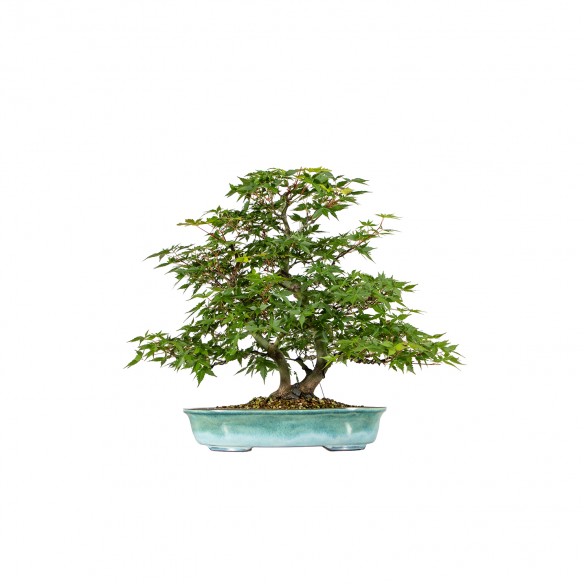


Originating from various regions of the Northern Hemisphere, including Asia and Europe, Malus spp. is a highly valued species in the world of bonsai due to its showy flowers and ornamental fruits. Its flowers, usually white or pink, appear in spring and provide a delicate and fragrant visual display. In autumn, Malus produces small decorative fruits, adding color and interest to the tree during the colder season. It is a relatively slow-growing but hardy plant, making it ideal for shaping and cultivation as a bonsai.
Sunlight: Malus spp. prefers full sun to encourage abundant flowering and healthy fruit development. It can tolerate partial shade, but flowering will be less intense and fruiting more limited.
Watering: Keep the soil evenly moist, avoiding waterlogging. Allow the top layer of soil to dry slightly between waterings. Malus spp. does not tolerate prolonged dry soil, especially when grown in a pot as a bonsai.
Humidity: Benefits from moderate humidity levels. Using a humidity tray is not mandatory, except in very dry environments, where it can help maintain the plant’s vigor.
Pruning: Pruning is essential to shape and control bonsai growth. Trim new shoots to encourage branching and maintain the desired shape. Pruning also helps improve flowering and fruiting.
Fertilization: Fertilize during the growing season (spring and summer) with a balanced, water-soluble fertilizer. Reduce or suspend fertilization in autumn and winter to avoid unnecessary growth.
Repotting: Repot Malus spp. every 2–3 years, preferably in early spring before new growth emerges. Use a well-draining soil mix suitable for bonsai.
Flowering and Fruiting: Malus spp. is valued for its colorful and fragrant spring flowers, followed by small ornamental fruits in autumn. Proper pruning and regular care encourage both flowering and decorative fruit production.
Data sheet
Originating from various regions of the Northern Hemisphere, including Asia and Europe, Malus spp. is a highly valued species in the world of bonsai due to its showy flowers and ornamental fruits. Its flowers, usually white or pink, appear in spring and provide a delicate and fragrant visual display. In autumn, Malus produces small decorative fruits, adding color and interest to the tree during the colder season. It is a relatively slow-growing but hardy plant, making it ideal for shaping and cultivation as a bonsai.