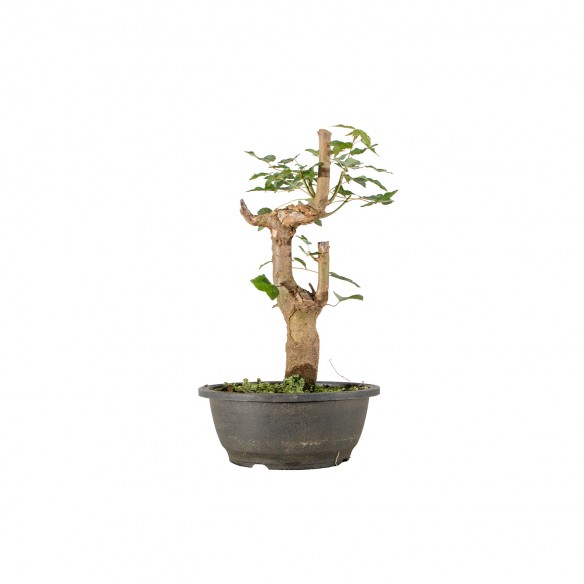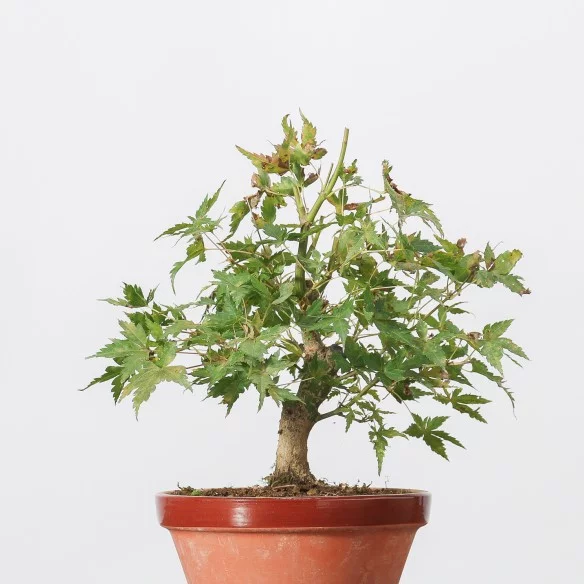


Originating from the Mediterranean region, Ficus carica is a deciduous species highly valued in bonsai for its robust trunk, rustic character and strong visual presence. Its large, deeply lobed leaves provide striking texture during the growing season, while fruiting adds ornamental and seasonal interest.
Sunlight: Prefers full sun. Good exposure promotes vigour and fruit production.
Watering: Requires regular watering during active growth. Tolerates short dry periods, but avoid waterlogging.
Humidity: Adapts well to dry environments. Misting is optional.
Pruning: Prune in spring and summer to control growth and maintain shape. Tolerates heavier pruning well.
Fertilization: Apply a balanced fertilizer during active growth. Reduce feeding in autumn and stop in winter.
Repotting: Every 2–3 years, in spring, using a well-draining substrate.
Flowering and Fruiting: Produces decorative and edible figs from summer to autumn. Flowers are not visible, as they develop inside the fruit.
Data sheet
Originating from the Mediterranean region, Ficus carica is a deciduous species highly valued in bonsai for its robust trunk, rustic character and strong visual presence. Its large, deeply lobed leaves provide striking texture during the growing season, while fruiting adds ornamental and seasonal interest.