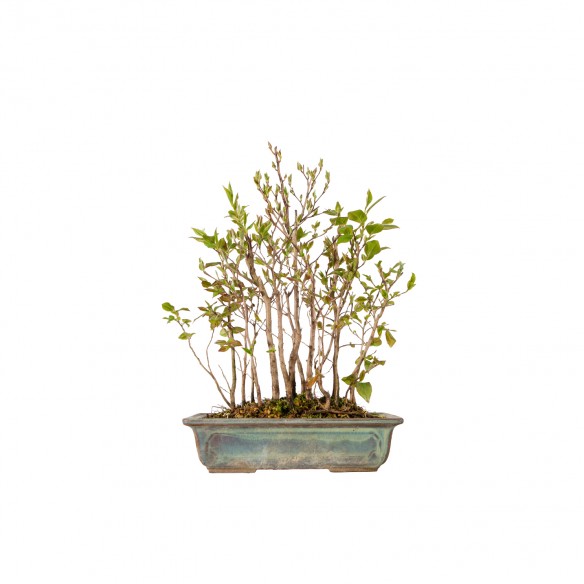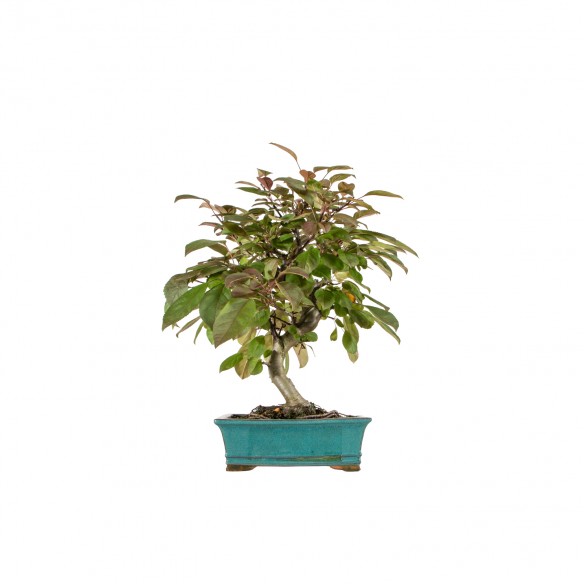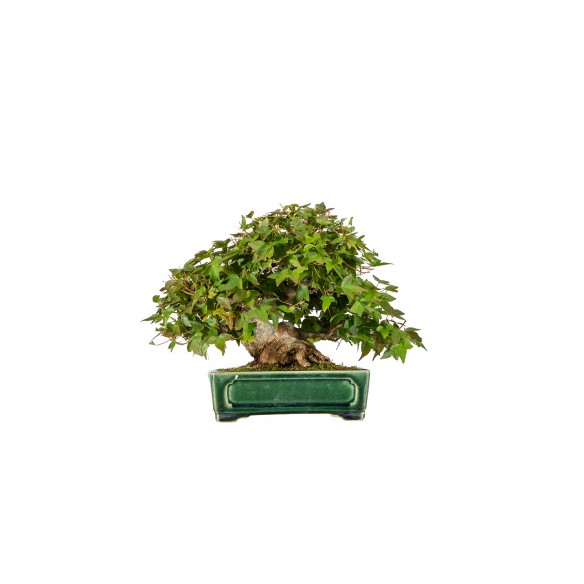


Native to Europe, Asia, and North America, Fraxinus spp., commonly known as ash, encompasses several species appreciated in bonsai for their natural elegance, fine branching, and delicate foliage. The compound leaves, light in texture and graceful in movement, display bright greens during spring and summer, turning to clear yellows in autumn. With a relatively fast growth rate, ash trees adapt easily to bonsai cultivation, offering well-defined trunks, good response to pruning, and a balanced, harmonious appearance.
Sunlight: Prefers full sun to partial shade. Good light helps shorten internodes and encourages denser branching.
Watering: Keep the soil evenly moist, avoiding both prolonged dryness and waterlogging. Ash trees appreciate consistent and regular moisture.
Humidity: Tolerates moderate humidity and benefits from good airflow. Avoid very dry environments during summer.
Pruning: Perform structural pruning in late winter. Maintenance pruning can be done throughout the growing season, cutting back shoots to promote fine ramification.
Fertilization: Fertilize in spring and summer with a balanced fertilizer. Reduce feeding in early autumn and avoid fertilizing in winter.
Repotting: Repot every 2–3 years, preferably in spring. Use a well-draining yet slightly moisture-retentive substrate, as the species prefers consistent humidity.
Flowering: Flowering is discreet and not significant in bonsai. The value of ash trees lies mainly in their compound foliage, branch movement, and elegant silhouette.
Data sheet
Native to Europe, Asia, and North America, Fraxinus spp., commonly known as ash, encompasses several species appreciated in bonsai for their natural elegance, fine branching, and delicate foliage. The compound leaves, light in texture and graceful in movement, display bright greens during spring and summer, turning to clear yellows in autumn. With a relatively fast growth rate, ash trees adapt easily to bonsai cultivation, offering well-defined trunks, good response to pruning, and a balanced, harmonious appearance.