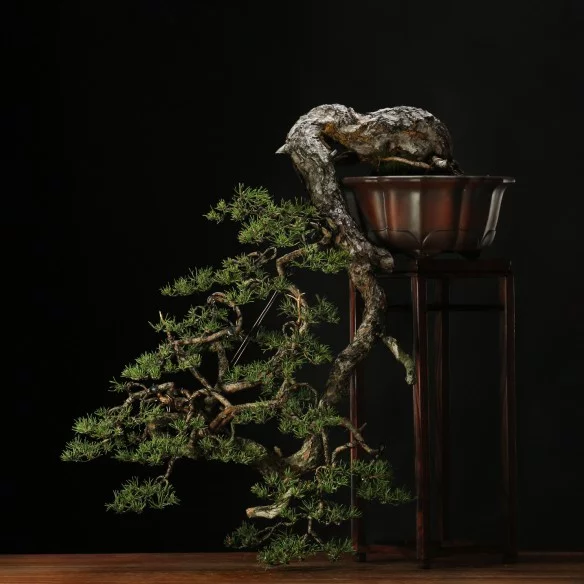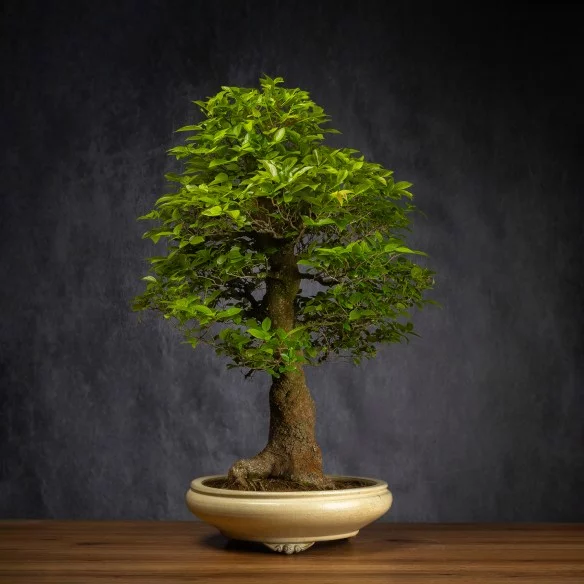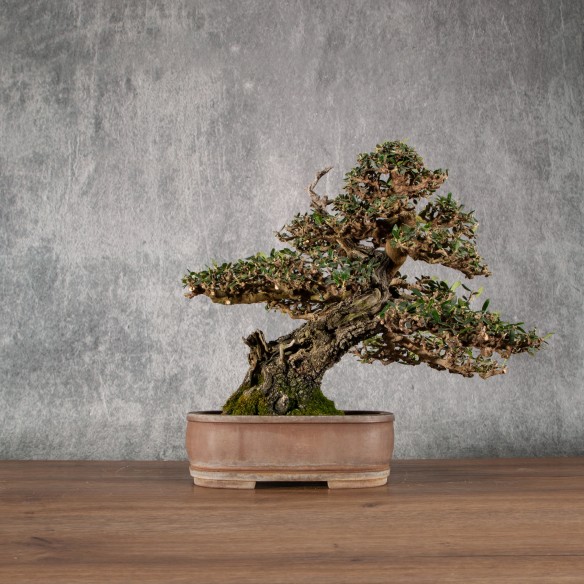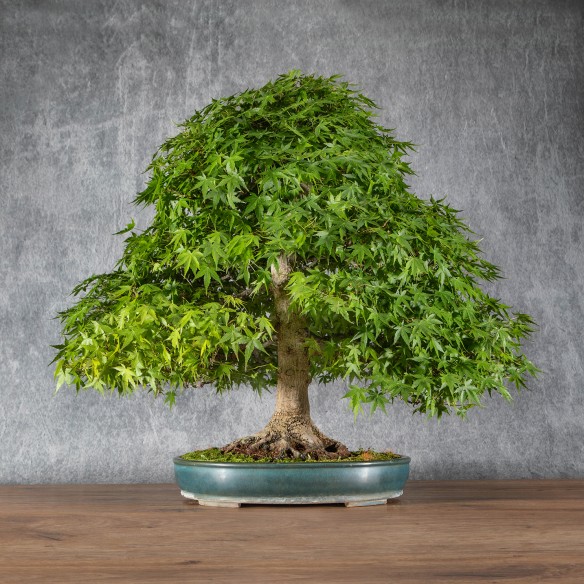


Native to Japan, the Pinus parviflora, also known as the Japanese white pine, is one of the most elegant and admired pine species in the bonsai world. Its short blue-green needles and rugged, textured trunk give it a refined and balanced appearance. It is a slow-growing tree that responds well to wiring and shaping, making it ideal for enthusiasts seeking a classic and graceful bonsai species.
Sunlight: Prefers full sun. Direct sunlight is essential to maintain vibrant needle colour and healthy growth.
Watering: Keep the soil slightly moist but avoid waterlogging. Pines do not tolerate excessive moisture; use a well-draining soil mix.
Humidity: Prefers moderate humidity. Avoid overly humid or stagnant environments.
Pruning: Prune new shoots in spring to control growth and maintain shape. Avoid heavy pruning during periods of intense heat.
Fertilization: Fertilize during spring and autumn with a balanced fertilizer suitable for conifers. Reduce fertilization during the colder winter months.
Repotting: Repot every 3–5 years, preferably in early spring before new growth starts. Use a well-draining, airy bonsai soil mix for conifers.
Flowering: The Pinus parviflora does not produce showy flowers but develops small decorative cones. Its compact needles and aged trunk are the main aesthetic features of this bonsai.
Data sheet
Native to Japan, the Pinus parviflora, also known as the Japanese white pine, is one of the most elegant and admired pine species in the bonsai world. Its short blue-green needles and rugged, textured trunk give it a refined and balanced appearance. It is a slow-growing tree that responds well to wiring and shaping, making it ideal for enthusiasts seeking a classic and graceful bonsai species.