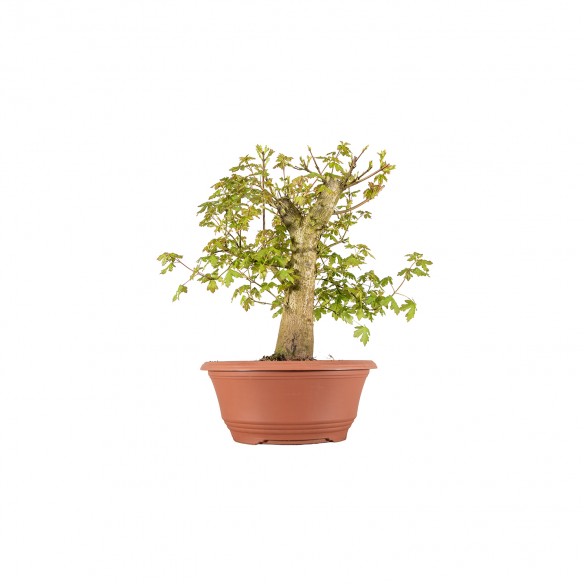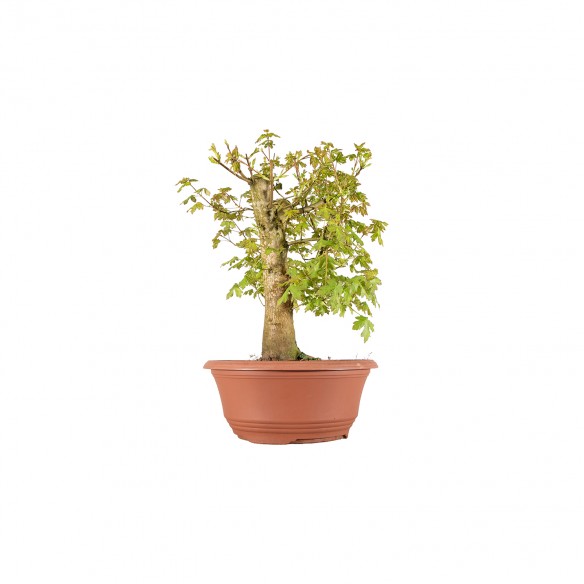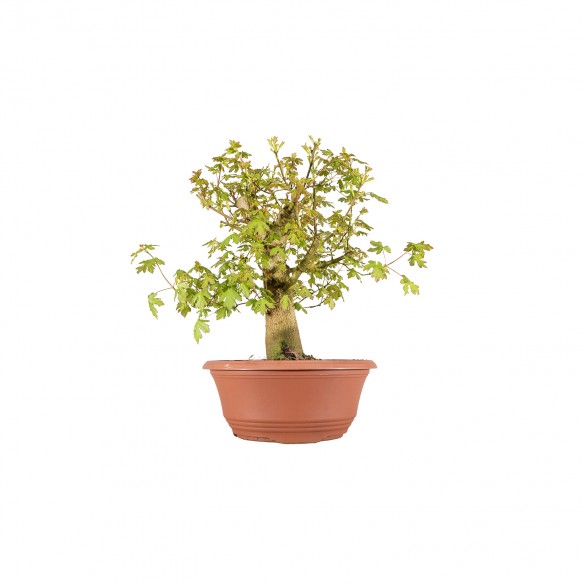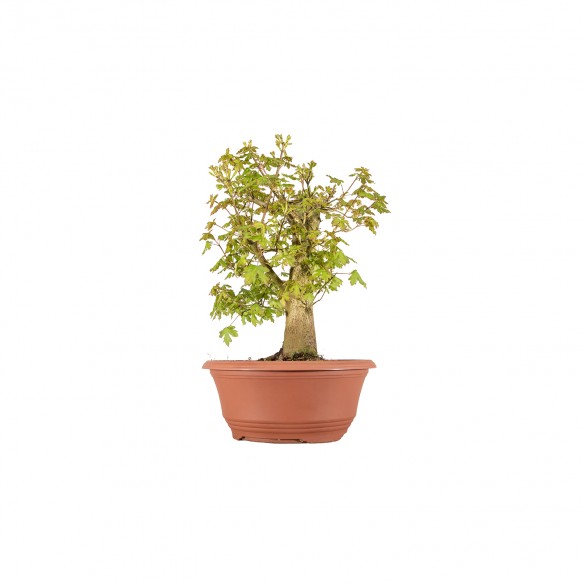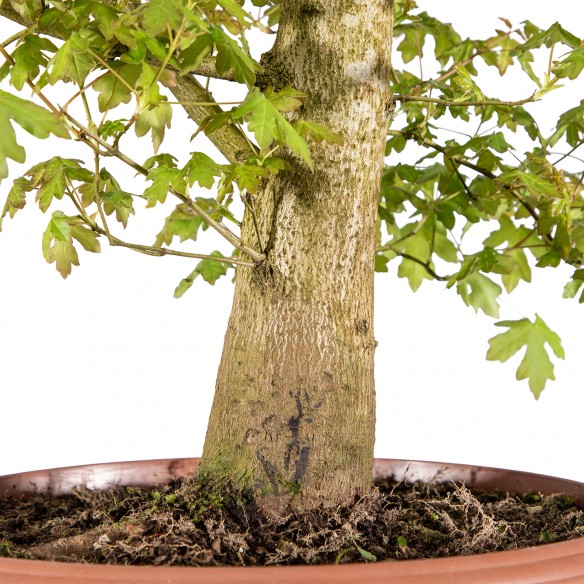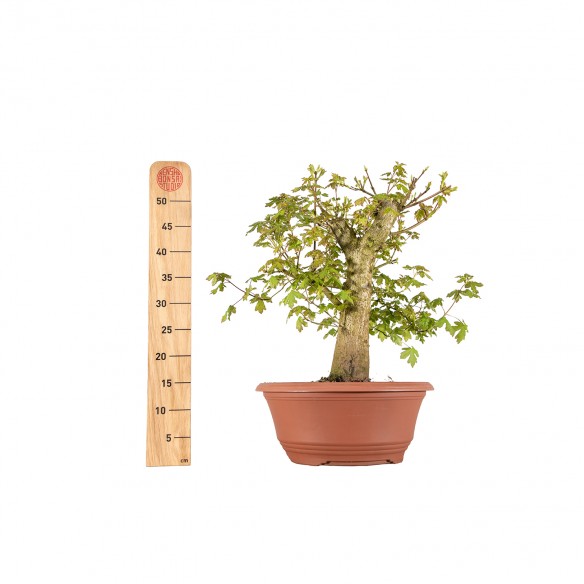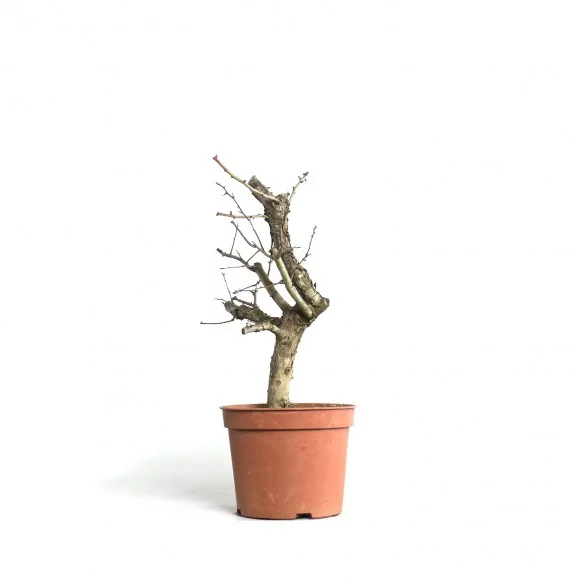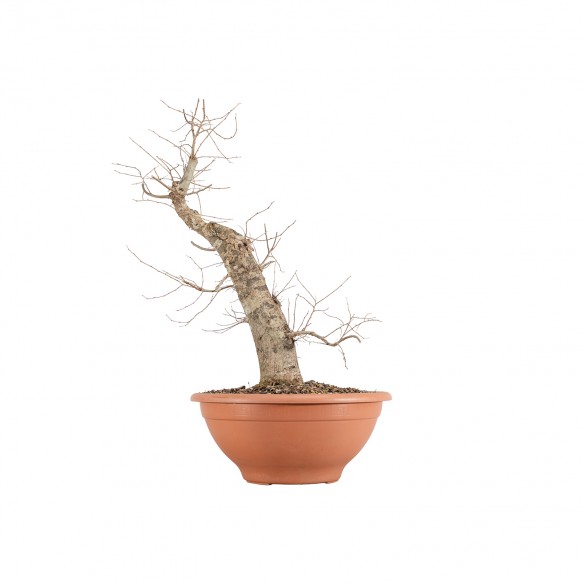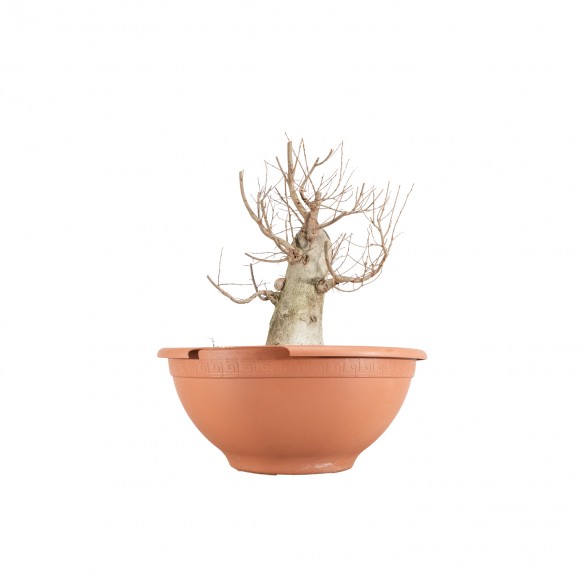


Originating from Europe and Western Asia, the Acer campestre is a deciduous species highly valued in bonsai for its natural appearance, hardiness, and excellent adaptability. Its small, softly lobed leaves create a balanced texture, while the autumn coloration—ranging from soft yellow to golden tones—adds depth and seasonal character to the tree.
Light: Prefers full sun to partial shade. Adequate sun exposure encourages short internodes, dense foliage, and stronger autumn colour.
Watering: Requires regular watering, keeping the substrate slightly moist. More tolerant of minor fluctuations than other Acer species, but prolonged dryness should be avoided.
Humidity: Adapts well to normal outdoor conditions. Misting is optional and mainly beneficial during very hot or dry periods.
Pruning: Prune in spring and summer to control vigour and promote fine ramification. Responds well to both maintenance pruning and structural cuts.
Fertilization: Apply a balanced fertilizer during the active growing season. Reduce feeding towards the end of summer and stop in autumn.
Repotting: Every 2–3 years in spring, using a well-draining substrate suitable for deciduous bonsai.
Flowering and Fruiting: The main ornamental interest lies in the foliage, branch structure, and overall silhouette.
Data sheet
Originating from Europe and Western Asia, the Acer campestre is a deciduous species highly valued in bonsai for its natural appearance, hardiness, and excellent adaptability. Its small, softly lobed leaves create a balanced texture, while the autumn coloration—ranging from soft yellow to golden tones—adds depth and seasonal character to the tree.