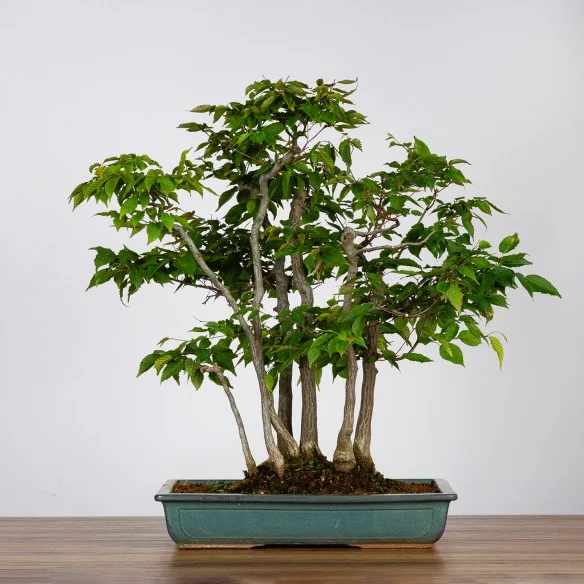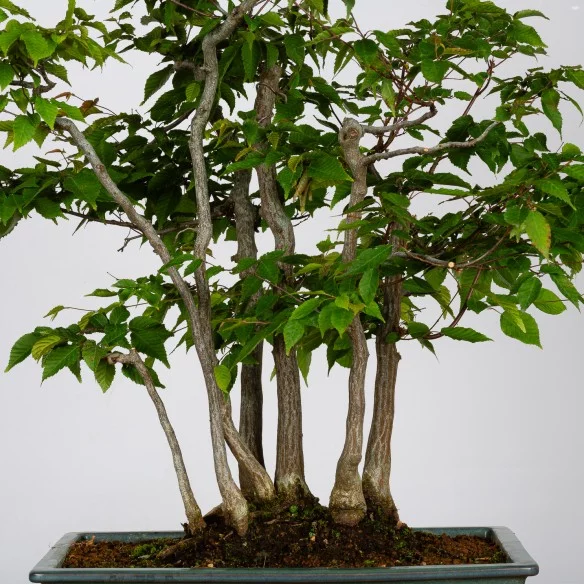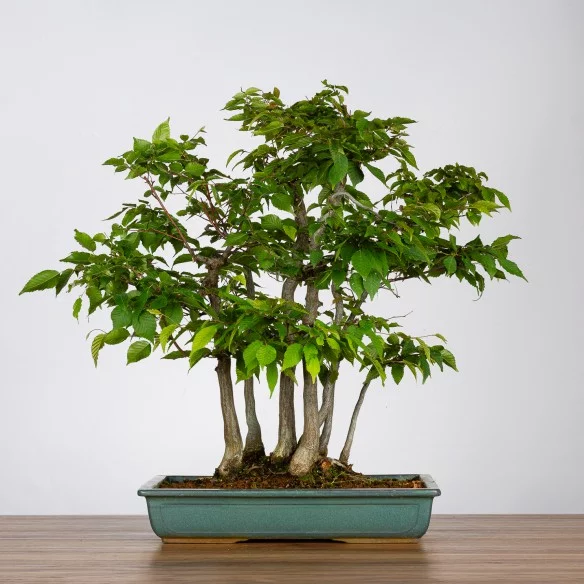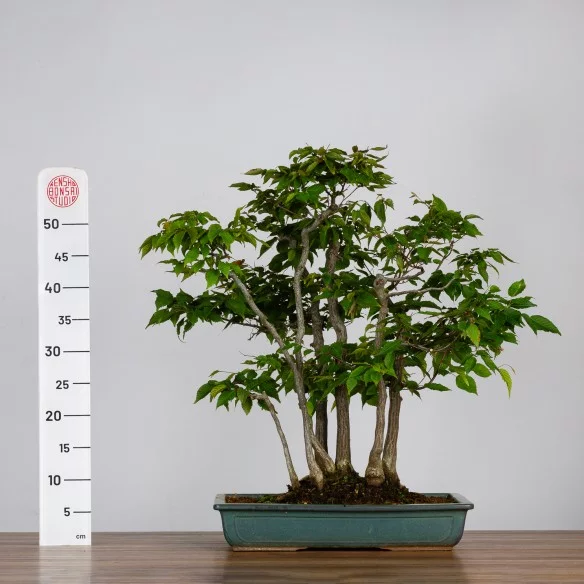
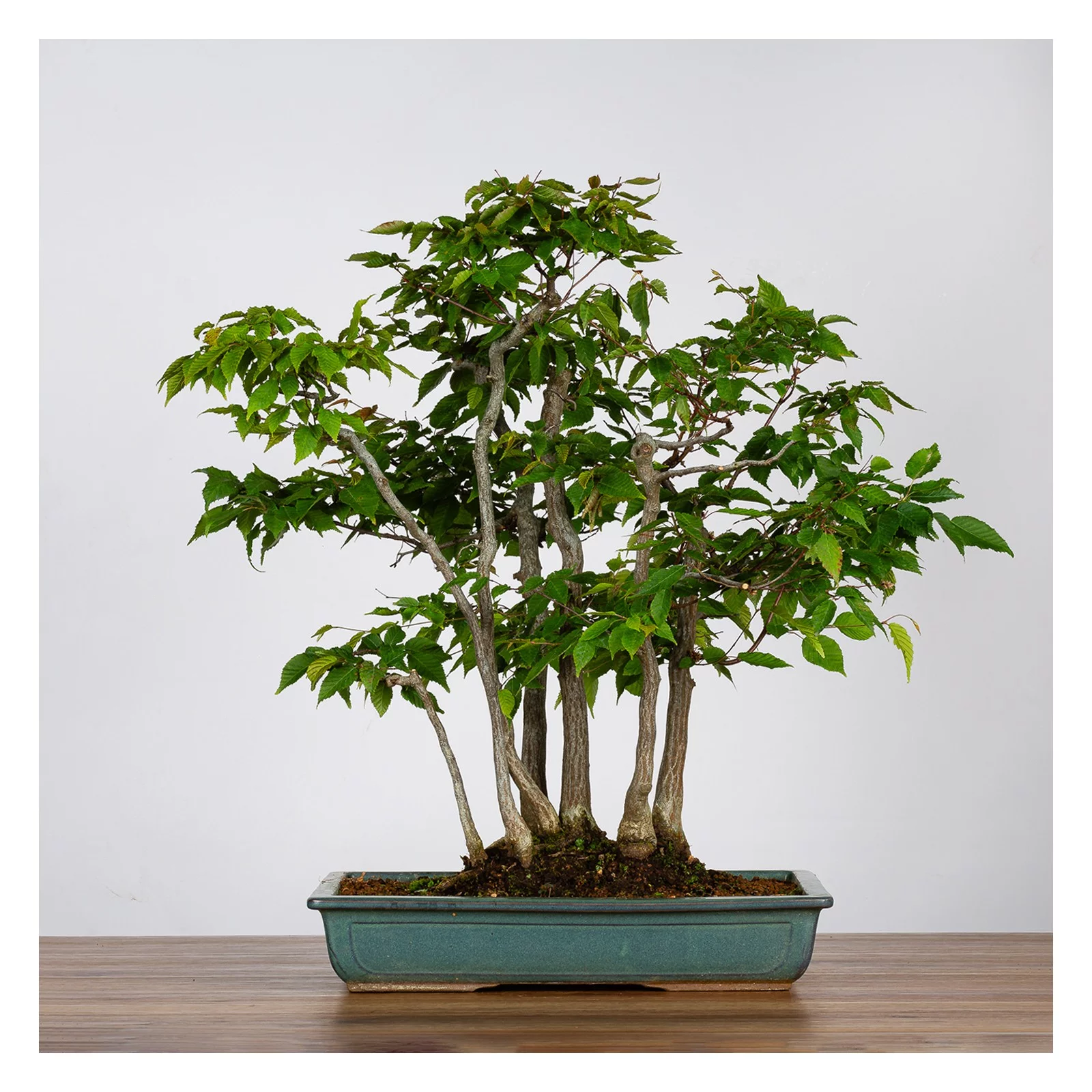


Native to Japan, the Carpinus japonica, or Japanese hornbeam, is highly valued in the bonsai world for its delicate foliage and elegant trunk texture. Its green leaves turn yellow or brown in autumn, creating a harmonious and natural visual effect. It is a moderately growing tree that responds very well to pruning and shaping, suitable for both beginners and experienced bonsai enthusiasts.
Sunlight: Prefers filtered sunlight or partial shade. Avoid direct exposure to intense sunlight, especially during the hottest months, to protect the delicate foliage.
Watering: Keep the soil slightly moist, avoiding waterlogging. Good drainage is essential to prevent root problems.
Humidity: Prefers moderate humidity. Avoid overly dry or excessively humid locations.
Pruning: Prune shoots outside the desired shape, especially after spring growth, to maintain harmony and aesthetic appeal of the bonsai.
Fertilization: Fertilize during spring and summer with a balanced fertilizer for deciduous trees. Reduce fertilization in autumn and avoid it during winter.
Repotting: Repot every 3–4 years, preferably in spring, using a well-draining soil mix suitable for deciduous bonsai trees.
Flowering: The true beauty of Carpinus japonica lies in the seasonal transformation of its leaves and the elegance of its trunk, which together reflect the refined and serene character of the bonsai throughout the year.
Data sheet
Native to Japan, the Carpinus japonica, or Japanese hornbeam, is highly valued in the bonsai world for its delicate foliage and elegant trunk texture. Its green leaves turn yellow or brown in autumn, creating a harmonious and natural visual effect. It is a moderately growing tree that responds very well to pruning and shaping, suitable for both beginners and experienced bonsai enthusiasts.