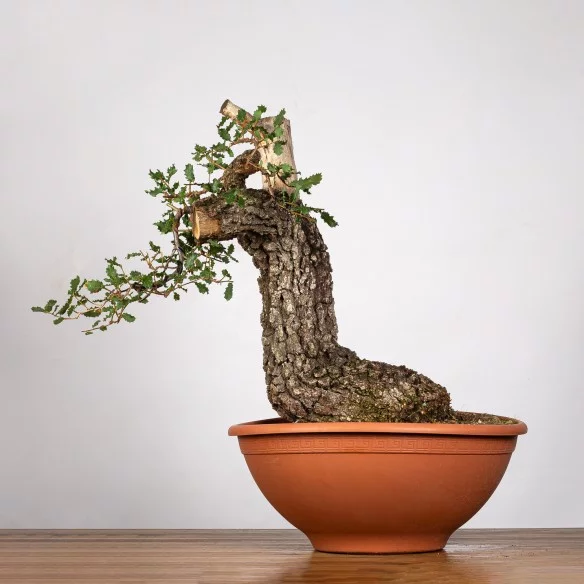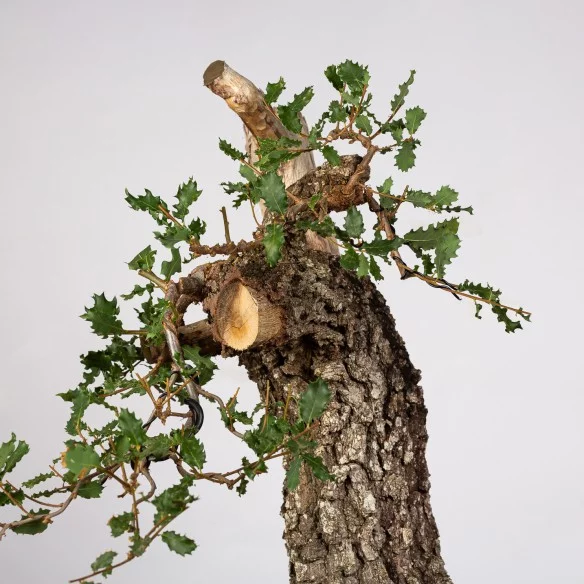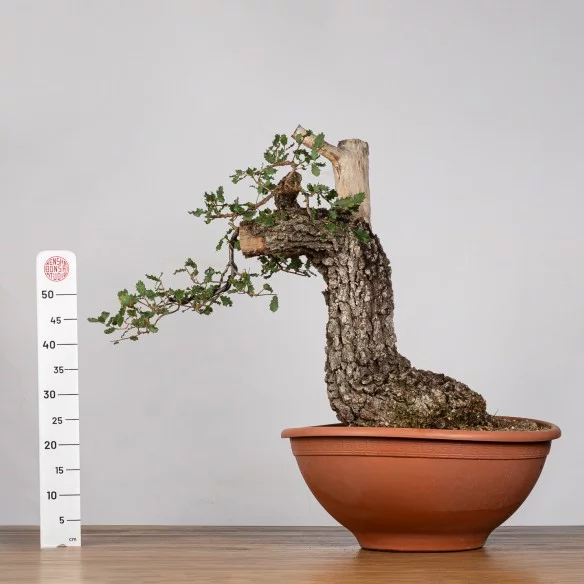
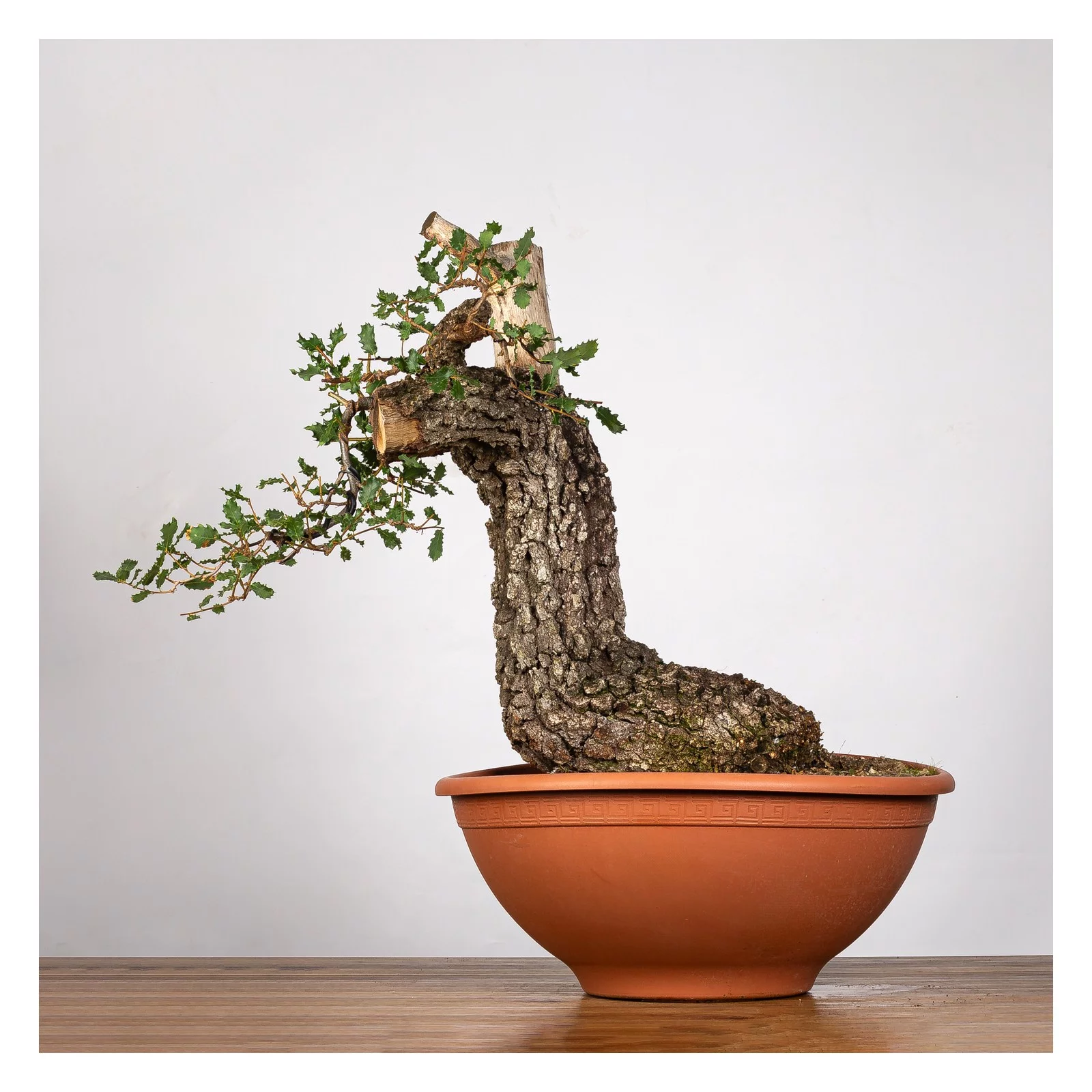


Native to the Iberian Peninsula and North Africa, the Quercus faginea, also known as the Portuguese oak, is highly appreciated in the bonsai world for its hardiness and majestic appearance. Its dark green leaves, which can turn golden and brown in autumn, along with its rugged, textured bark, give the bonsai a strong and natural look. It grows at a moderate rate and responds well to pruning and shaping, making it suitable for both beginners and experienced bonsai enthusiasts.
Sunlight: Prefers full sun but tolerates partial shade. Direct sunlight promotes vigorous growth and smaller leaves.
Watering: Keep the soil slightly moist but never waterlogged. Oaks prefer well-drained substrates.
Humidity: Prefers moderate humidity levels. Avoid overly humid or poorly ventilated environments to prevent root rot.
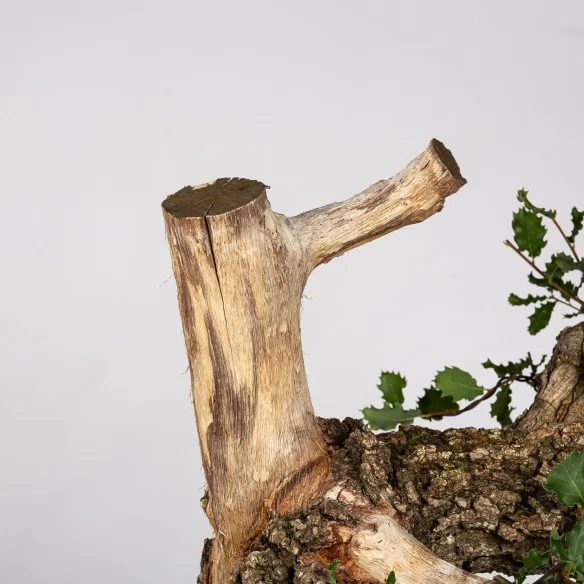
Pruning: Prune longer branches and unwanted shoots to maintain the bonsai’s shape. Pruning should be done in late winter or early spring.
Fertilization: Fertilize during the growing season (spring and summer) with a balanced fertilizer for deciduous trees. Reduce fertilization in autumn and avoid it in winter.
Repotting: Recommended every 3–4 years, preferably in early spring, using a well-draining bonsai soil mix.
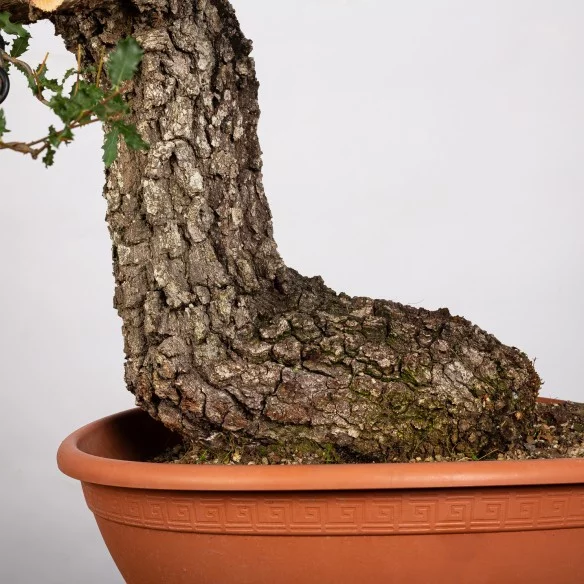
Flowering: The Quercus faginea does not produce showy flowers but may form small acorns. The trunk shape and bark texture are the key aesthetic features of this bonsai.
Data sheet
Native to the Iberian Peninsula and North Africa, the Quercus faginea, also known as the Portuguese oak, is highly appreciated in the bonsai world for its hardiness and majestic appearance. Its dark green leaves, which can turn golden and brown in autumn, along with its rugged, textured bark, give the bonsai a strong and natural look. It grows at a moderate rate and responds well to pruning and shaping, making it suitable for both beginners and experienced bonsai enthusiasts.