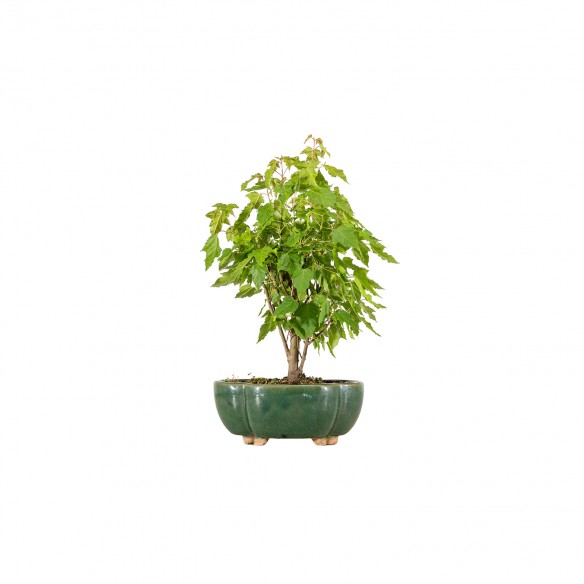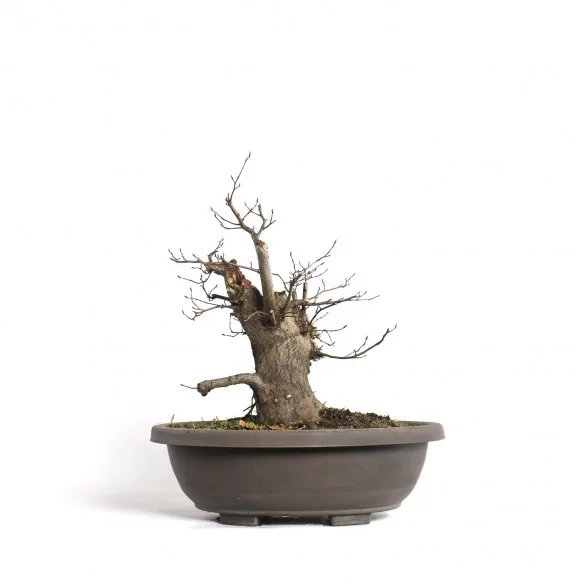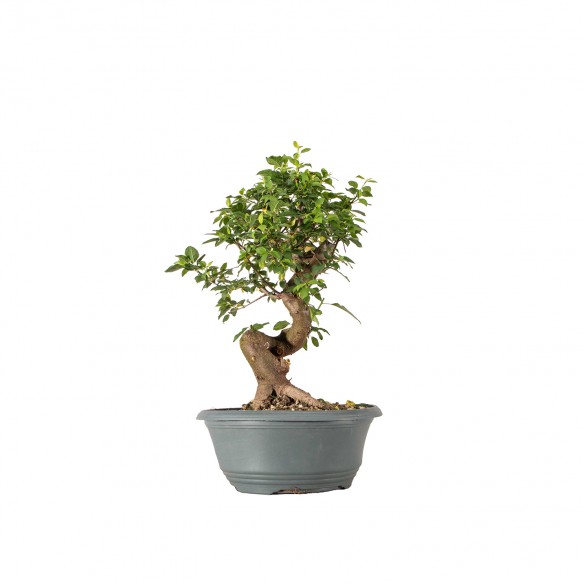


Originating from China, Malus Everest is one of the most appreciated species in the world of bonsai for its beautiful spring blossoms and decorative autumn fruits. Its flowers are white and delicate, attracting butterflies and bees, while the fruits are small and red, adding a touch of color to the bonsai. Its leaves are small and oval, making it ideal for bonsai cultivation due to its compact growth.
Sunlight: Malus Everest prefers full sun for more abundant flowering and fruiting. It can tolerate partial shade, but fruit production will be lower.
Watering: Keep the soil slightly moist, but never waterlogged. Allow the top layer of soil to dry slightly between waterings. It is more drought-tolerant than other apple varieties, but regular watering is necessary, especially when grown in a bonsai pot.
Humidity: Malus Everest is not very demanding in terms of humidity but benefits from moderate levels. A humidity tray is not necessary unless the environment is extremely dry.
Pruning: Pruning is essential to shape and maintain the bonsai form. Trim new growth to encourage branching and keep the size compact. Wire pruning can be done during the growing season, but be careful with thorns.
Fertilization: Fertilize your Malus Everest during the growing season (spring and summer) with a balanced, water-soluble fertilizer. Reduce or stop fertilization in late summer and during autumn.
Repotting: Repot your Malus Everest every 2–3 years, ideally in early spring before new growth. Use a well-draining bonsai soil mix.
Flowering and Fruiting: Malus Everest is known for its white or slightly pink flowers that appear in spring, followed by small apples that remain through autumn. Proper pruning helps stimulate good fruit production.
Data sheet
Originating from China, Malus Everest is one of the most appreciated species in the world of bonsai for its beautiful spring blossoms and decorative autumn fruits. Its flowers are white and delicate, attracting butterflies and bees, while the fruits are small and red, adding a touch of color to the bonsai. Its leaves are small and oval, making it ideal for bonsai cultivation due to its compact growth.