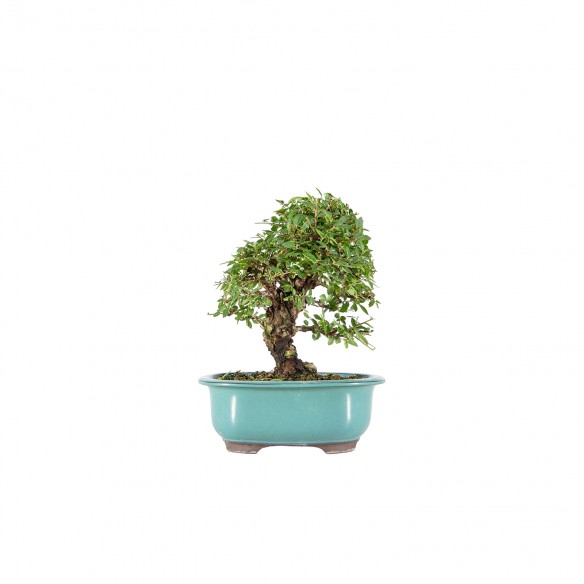


An extremely rare variety of the species Fagus sylvatica (European beech). Native to Europe, Fagus sylvatica ‘Sandrode’ is one of the most admired species in the bonsai world for its elegance and beauty. Its leaves, which shift in shades of green throughout the year, create a charming and sophisticated appearance. It is a slow-growing and compact plant, with a sturdy trunk and well-distributed branching, making it ideal for bonsai cultivation. In addition, its smooth, silvery bark adds a touch of elegance to the whole composition.
Sunlight: Fagus sylvatica ‘Sandrode’ prefers full sun for healthy growth and development. It tolerates partial shade, though growth may be slower.
Watering: Keep the soil slightly moist, avoiding waterlogging. Allow the top layer of soil to dry between waterings. Fagus sylvatica ‘Sandrode’ is sensitive to excess water.
Humidity: This species is not very demanding regarding humidity but benefits from moderate levels. A humidity tray is only necessary in very dry environments.
Pruning: Pruning is essential to maintain the tree’s shape and health. It can be done to control growth and encourage branching. Avoid pruning in winter, when the tree is dormant.
Fertilization: Fertilize in spring and summer with a balanced fertilizer. Reduce or suspend fertilization in autumn and winter.
Repotting: Repot every 2–3 years, preferably in spring before new growth begins. Use a well-draining soil mix.
Flowering and fruiting: Fagus sylvatica ‘Sandrode’ is an ornamental tree that does not produce significant flowers or fruits. Its main attraction is its bright green leaves, which turn yellow and orange in autumn. Proper pruning helps keep the tree healthy and aesthetically harmonious.
Data sheet
An extremely rare variety of the species Fagus sylvatica (European beech). Native to Europe, Fagus sylvatica ‘Sandrode’ is one of the most admired species in the bonsai world for its elegance and beauty. Its leaves, which shift in shades of green throughout the year, create a charming and sophisticated appearance. It is a slow-growing and compact plant, with a sturdy trunk and well-distributed branching, making it ideal for bonsai cultivation. In addition, its smooth, silvery bark adds a touch of elegance to the whole composition.