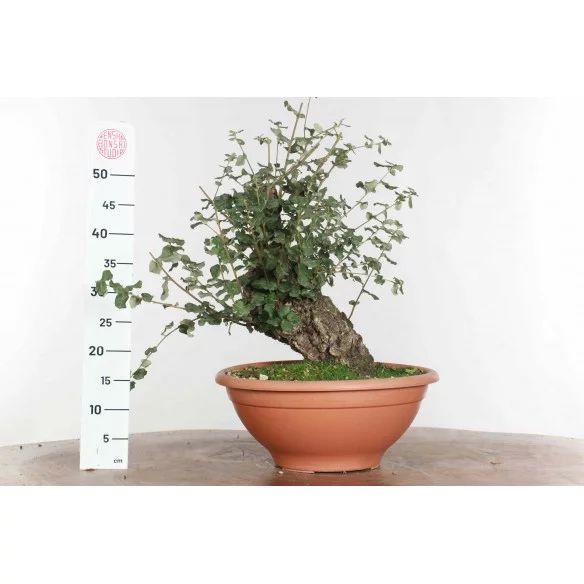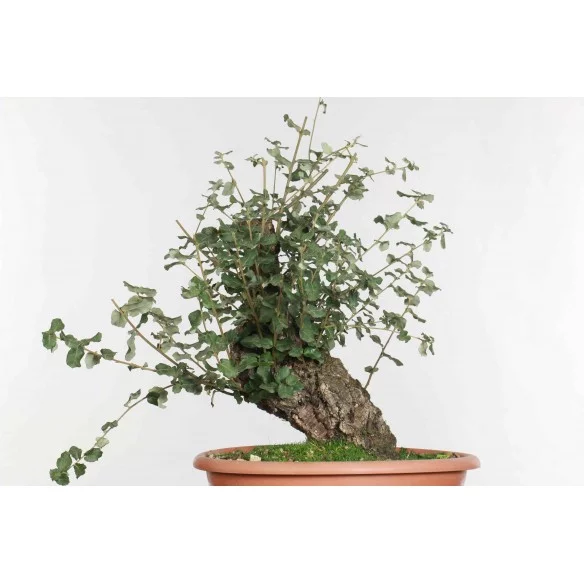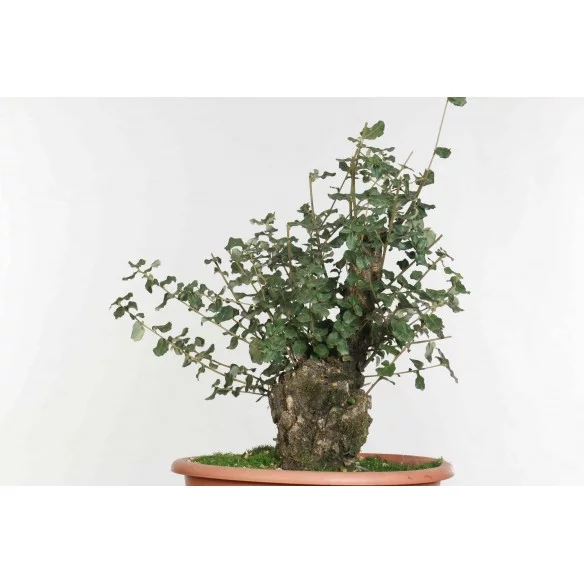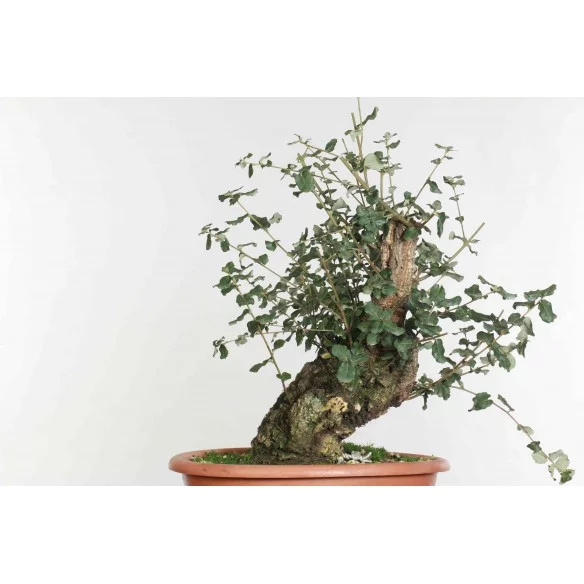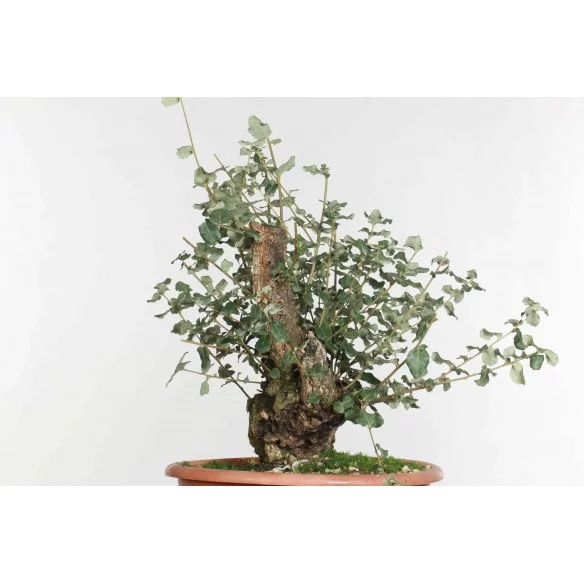
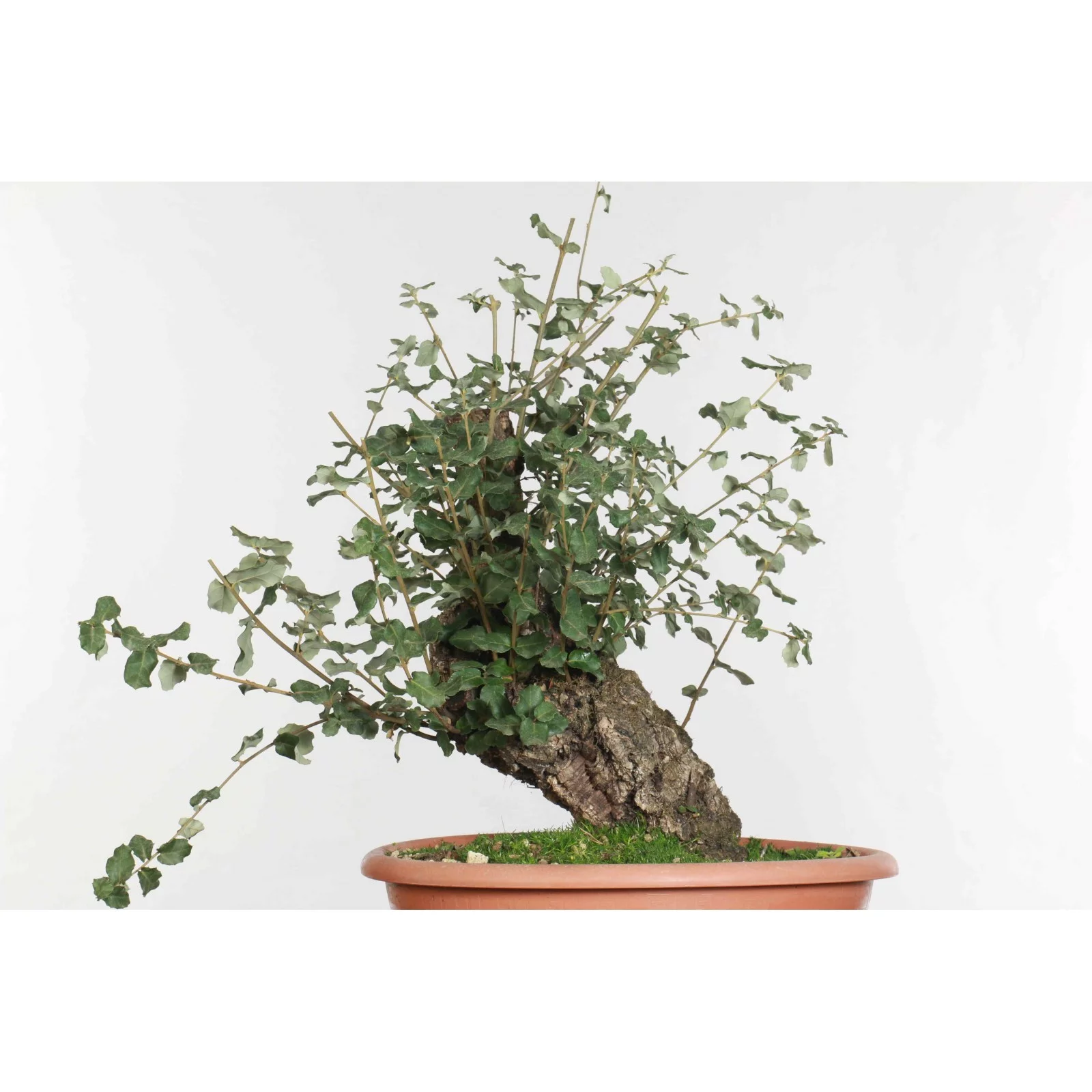


Native to the Mediterranean region, the Quercus suber, known as the cork oak, is one of the most iconic tree species of Portugal and a favourite in the bonsai world for its strength and distinctive bark texture. Its thick, rugged cork bark and dark green glossy leaves give the bonsai a striking and characterful appearance. It is a slow-growing but extremely hardy and long-lived species, ideal for bonsai enthusiasts who appreciate trees with presence and personality.
Sunlight: Prefers full sun. The cork oak requires good sunlight exposure to maintain vigour and balanced growth.
Watering: Keep the soil slightly moist but avoid overwatering. Quercus suber is drought-tolerant but dislikes waterlogged soil. Use a well-draining substrate.
Humidity: Prefers moderate humidity. Avoid overly humid or poorly ventilated environments.
Pruning: Prune branches in late winter or early spring to shape the tree. Avoid heavy pruning, as the cork oak recovers slowly.
Fertilization: Fertilize during spring and summer with a balanced fertilizer, reducing in autumn and avoiding in winter.
Repotting: Repot every 3–4 years, preferably in spring, using a well-draining soil mix suitable for Mediterranean trees.
Flowering: The Quercus suber does not produce showy flowers but may form small acorns. The bark texture and trunk form are the most striking features of this bonsai.
Data sheet
Native to the Mediterranean region, the Quercus suber, known as the cork oak, is one of the most iconic tree species of Portugal and a favourite in the bonsai world for its strength and distinctive bark texture. Its thick, rugged cork bark and dark green glossy leaves give the bonsai a striking and characterful appearance. It is a slow-growing but extremely hardy and long-lived species, ideal for bonsai enthusiasts who appreciate trees with presence and personality.