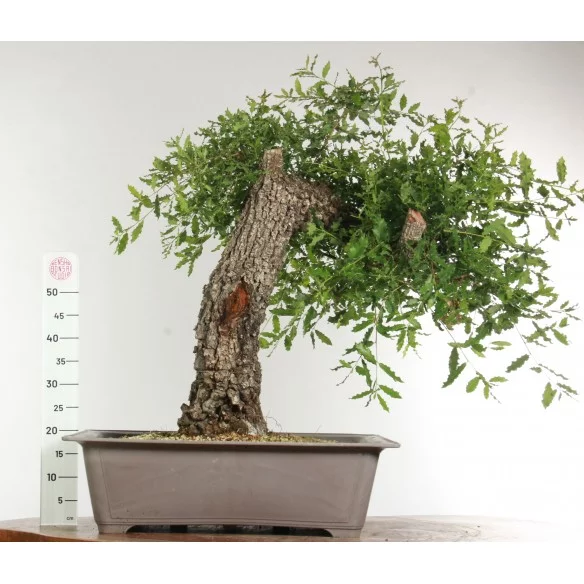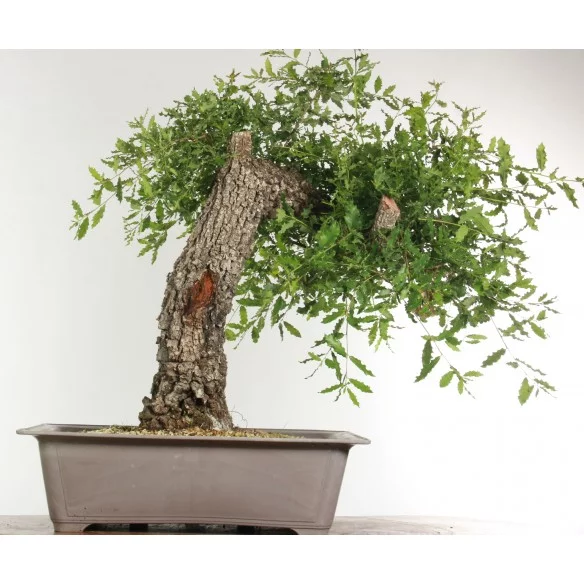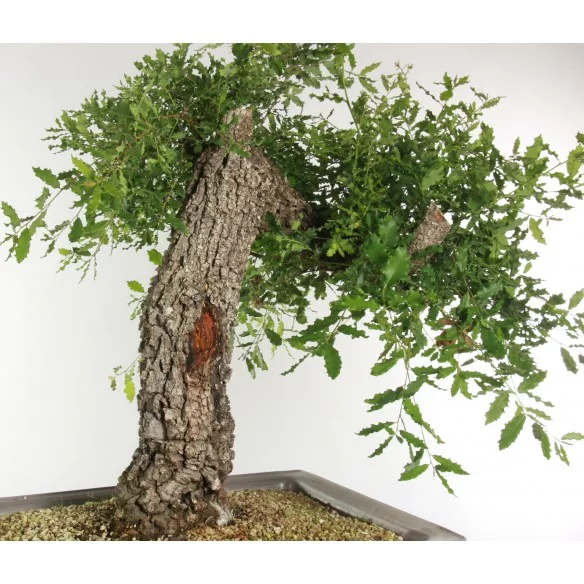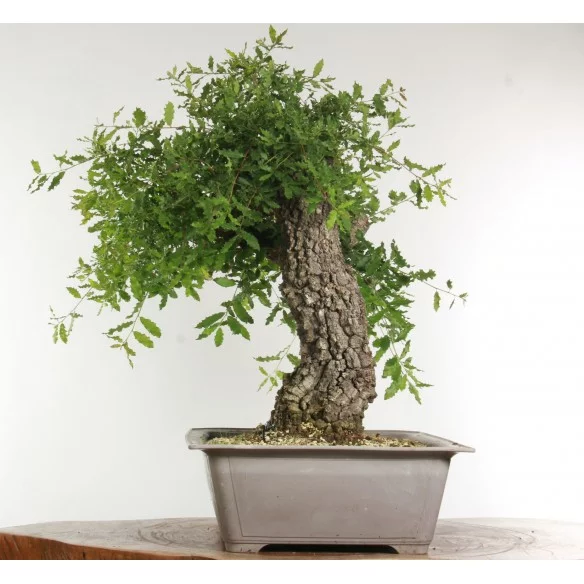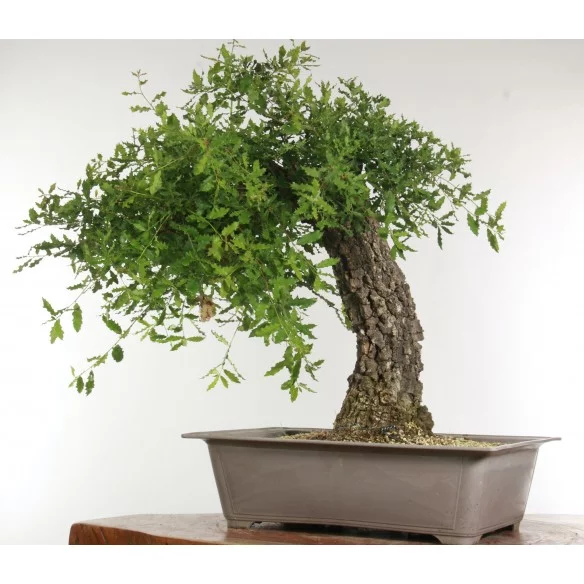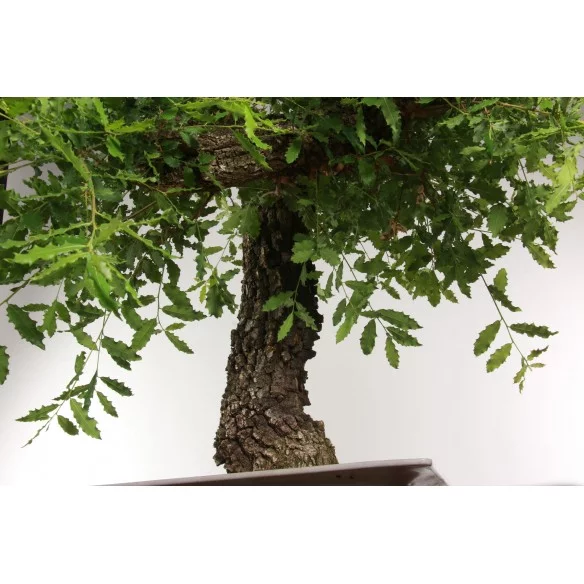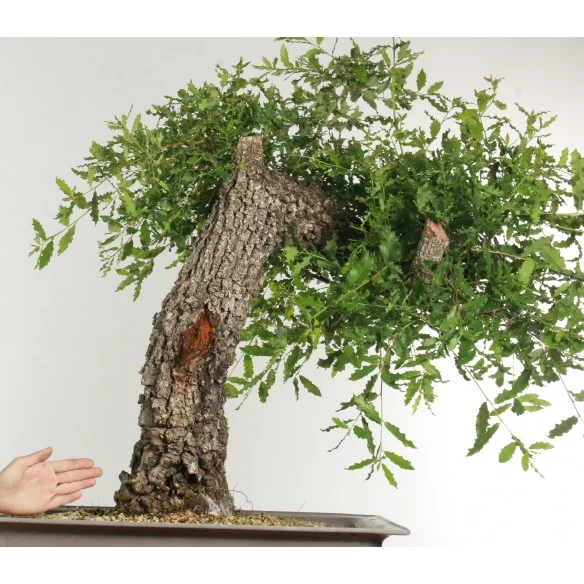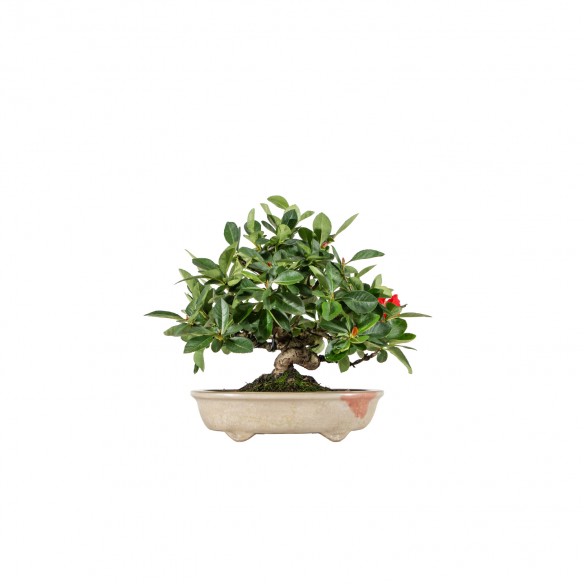
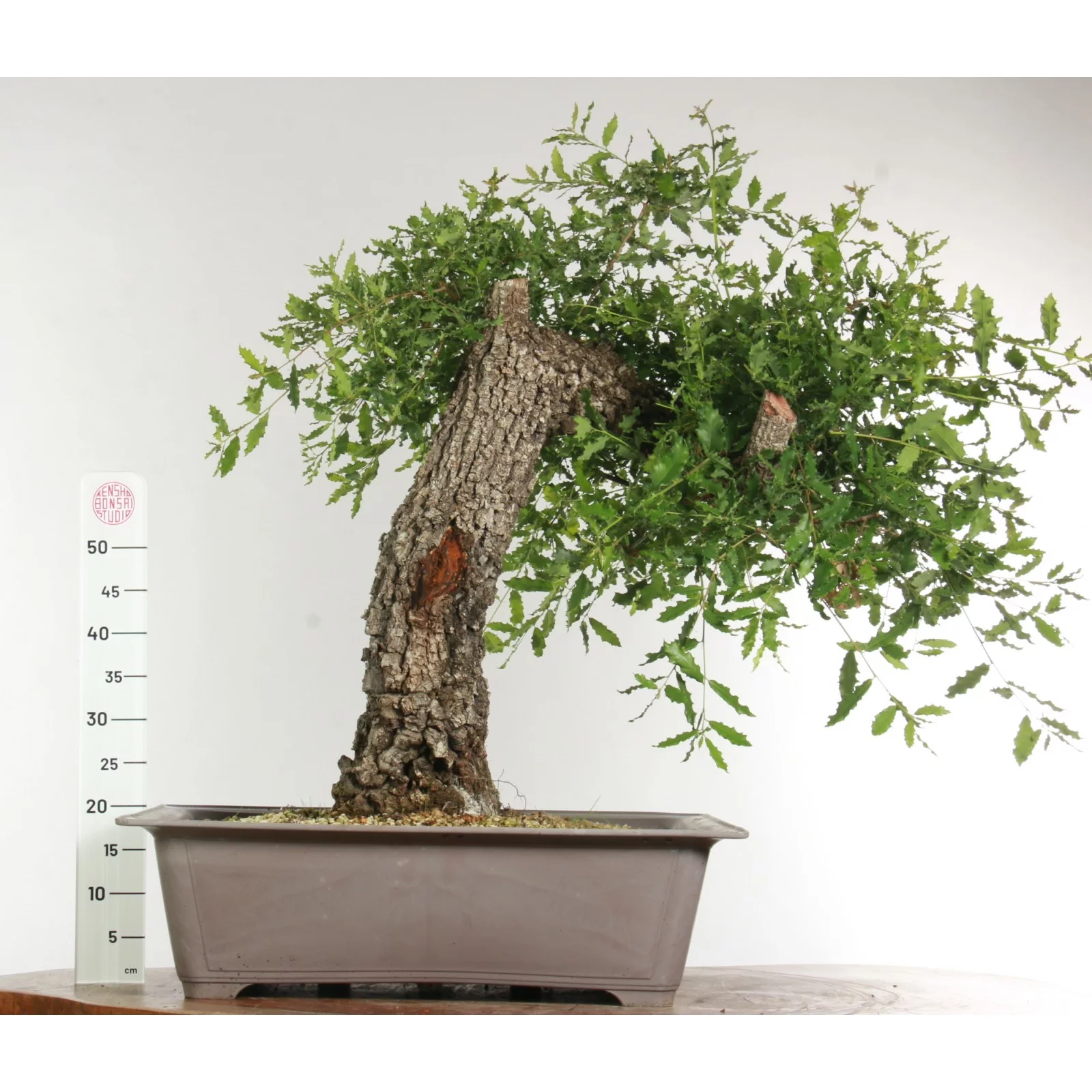


Native to the Iberian Peninsula, Quercus faginea, also known as Portuguese oak, is a deciduous species distinguished by its robustness, sturdy trunk, and dense foliage. Its small, leathery leaves display green shades in spring and summer, turning golden in autumn, providing a harmonious natural beauty throughout the seasons. It is a moderately growing bonsai, ideal for those seeking presence, balance, and character in their trees.
Sunlight: Prefers full sun but tolerates partial shade, especially in hot climates, to protect leaves from intense sun.
Watering: Keep the soil slightly moist, avoiding waterlogging. Good drainage is essential for healthy roots.
Humidity: Tolerates moderate humidity levels, but should be grown in a well-ventilated area to prevent fungal issues.
Pruning: Prune after spring growth to maintain shape and encourage fine branching. Maintenance pruning can be done throughout the growing season.
Fertilization: Fertilize during spring and summer with a balanced fertilizer for deciduous trees. Reduce in autumn and stop in winter.
Repotting: Repot every 3–4 years, preferably in spring, using a well-draining soil mix.
Flowering: The beauty of Quercus faginea lies in the elegance of its trunk and the seasonal transformation of its leaves, reflecting strength, balance, and natural serenity.
Data sheet
Native to the Iberian Peninsula, Quercus faginea, also known as Portuguese oak, is a deciduous species distinguished by its robustness, sturdy trunk, and dense foliage. Its small, leathery leaves display green shades in spring and summer, turning golden in autumn, providing a harmonious natural beauty throughout the seasons. It is a moderately growing bonsai, ideal for those seeking presence, balance, and character in their trees.