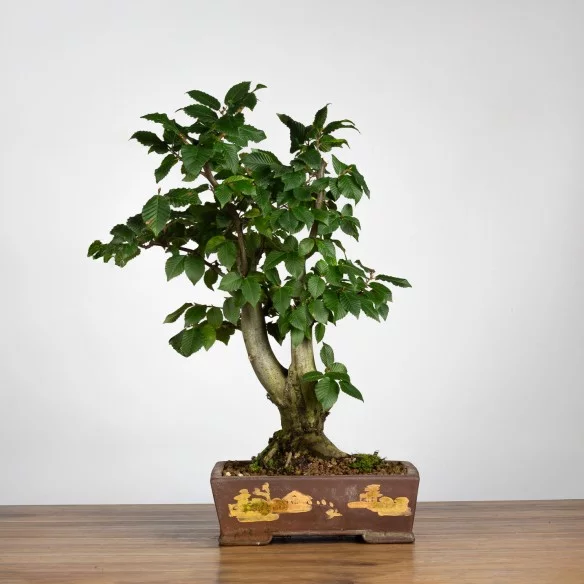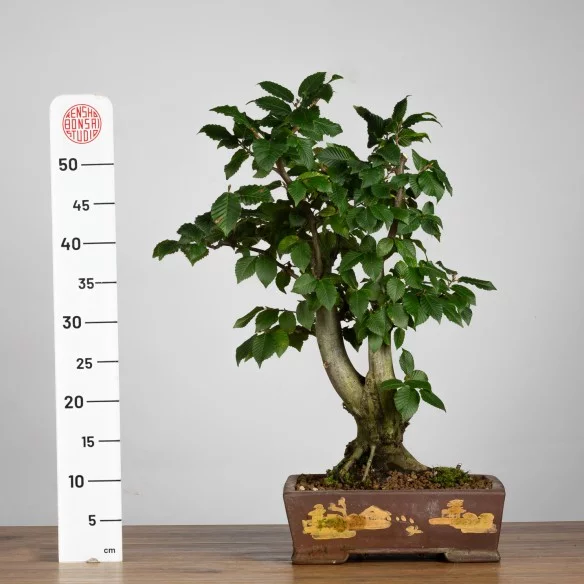
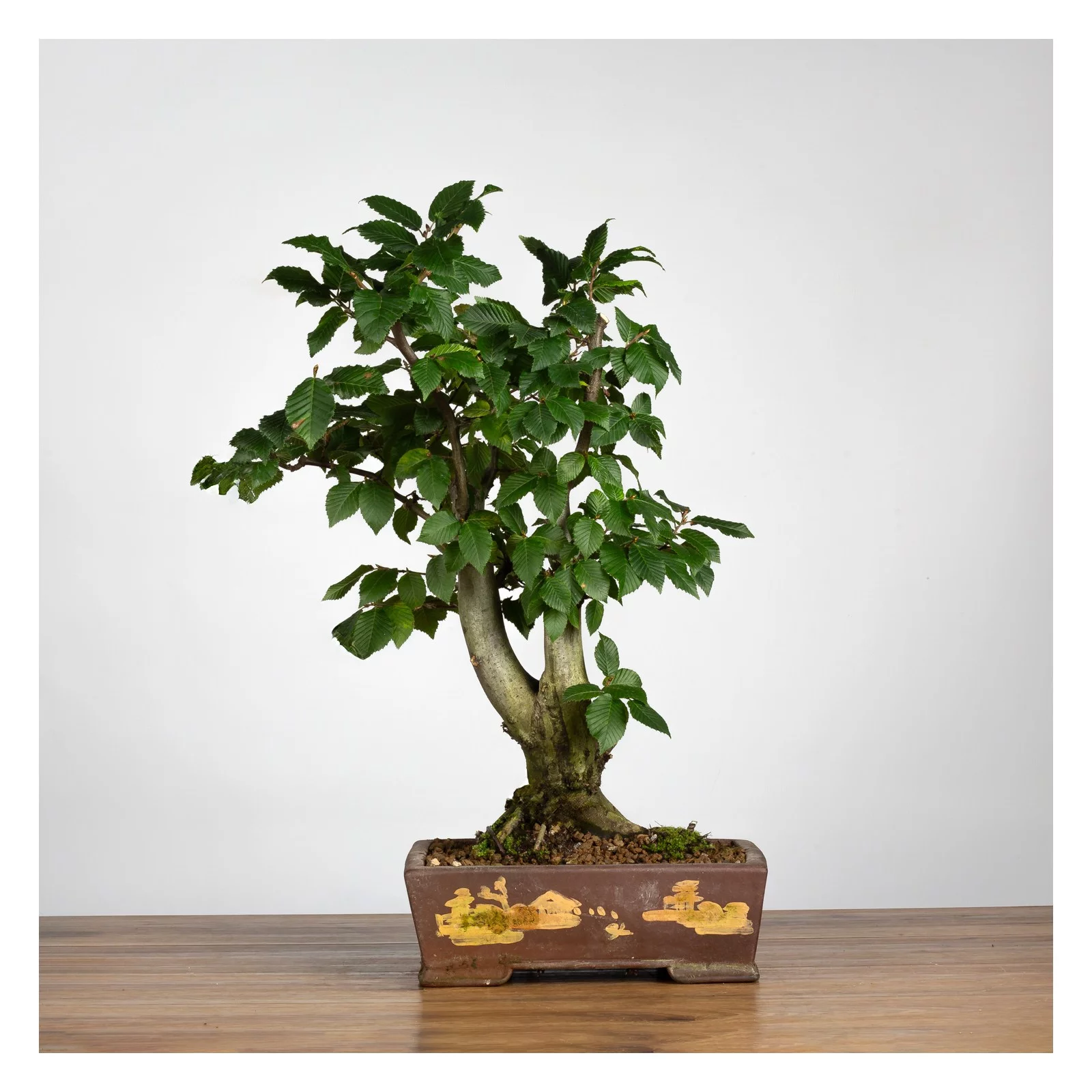


Originating from Europe, the Carpinus betulus is a highly valued species in the bonsai world due to its dense and elegant foliage. Its green leaves, which can turn yellow in autumn, and sturdy trunk give the bonsai a natural and balanced appearance. It grows at a moderate rate and can be easily shaped and styled according to the grower’s preference. Carpinus betulus is suitable for both beginners and experienced bonsai enthusiasts due to its resilience and adaptability.
Sunlight: Prefers filtered sunlight or partial shade. Avoid direct exposure to intense sun, especially in summer, to protect the leaves.
Watering: Keep the soil slightly moist, avoiding waterlogging. Good drainage is essential to prevent root diseases.
Humidity: Prefers moderate humidity. Avoid overly dry or excessively humid conditions.
Pruning: Regularly trim branches and leaves that grow outside the desired shape. Pruning helps maintain the bonsai’s aesthetics and promotes healthy growth.
Fertilization: Fertilize during the growing season (spring and summer) with a balanced fertilizer for deciduous trees. Reduce fertilization in autumn and avoid fertilizing in winter.
Repotting: Recommended every 3–4 years, preferably in spring, using a soil mix suitable for deciduous bonsai trees.
Flowering: This species does not produce showy flowers but may form small seeds. Foliage and trunk structure are the main features for bonsai aesthetics.
Data sheet
Originating from Europe, the Carpinus betulus is a highly valued species in the bonsai world due to its dense and elegant foliage. Its green leaves, which can turn yellow in autumn, and sturdy trunk give the bonsai a natural and balanced appearance. It grows at a moderate rate and can be easily shaped and styled according to the grower’s preference. Carpinus betulus is suitable for both beginners and experienced bonsai enthusiasts due to its resilience and adaptability.