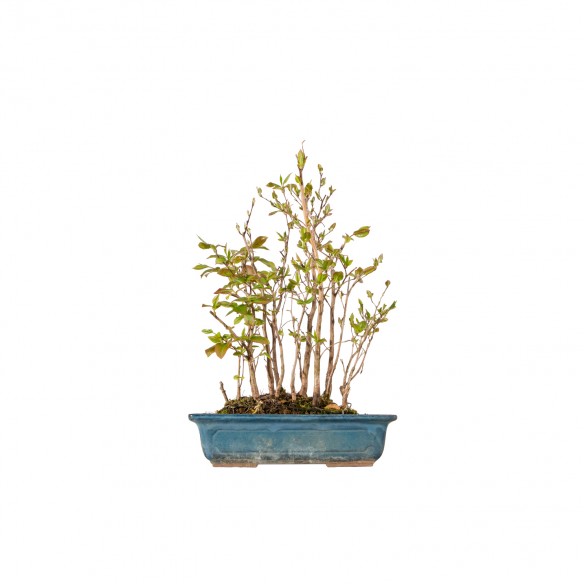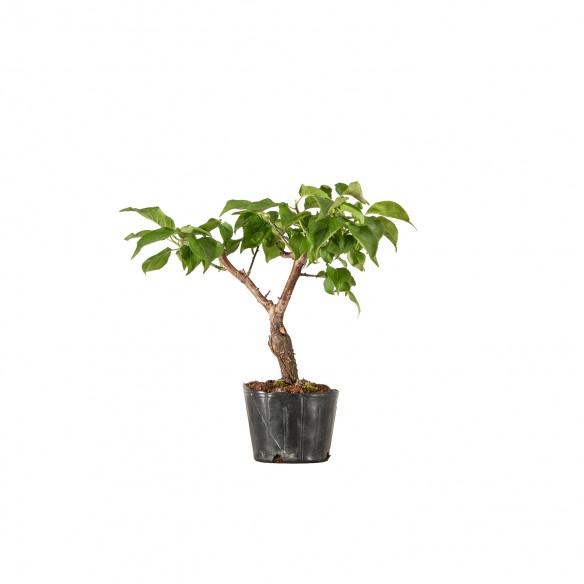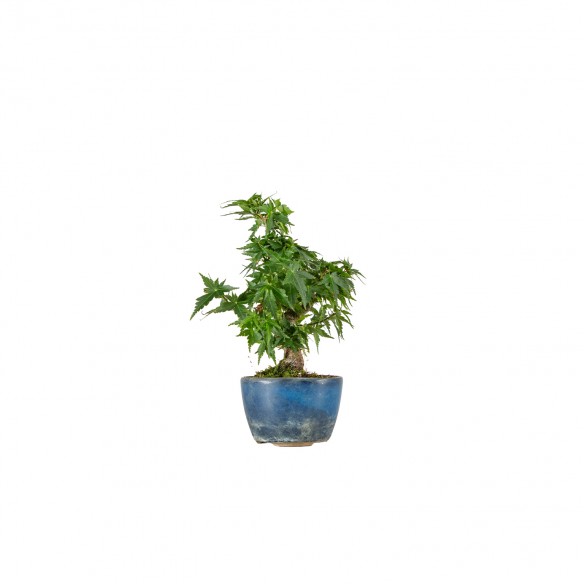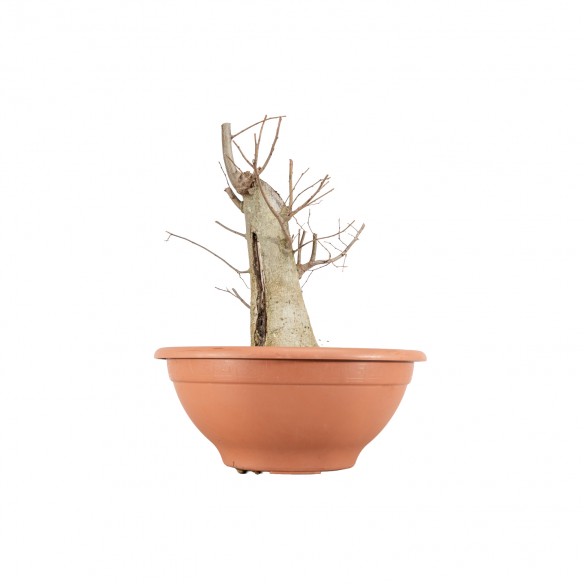


Fagus sylvatica, native to Europe, is highly valued in bonsai for its natural elegance, dense canopy, and oval, glossy green leaves that turn golden, orange, and copper tones in autumn. Its fine branching and smooth grey bark add great aesthetic appeal. It is a relatively slow-growing species but rewards the grower with a harmonious and majestic appearance.
Sunlight: Prefers full sun to partial shade. In hot climates, it benefits from some protection from intense summer sun.
Watering: Requires regular watering, keeping the soil slightly moist at all times. It does not tolerate prolonged drought or waterlogging.
Humidity: Prefers moderate air humidity. In dry environments, occasional misting can be beneficial for the foliage.
Pruning: Structural pruning should be carried out in winter during dormancy. Pinching can be done during the growing season to reduce leaf size and encourage branching.
Fertilization: Fertilise regularly in spring and summer with a balanced fertiliser. Reduce feeding in late summer and stop in autumn.
Repotting: Repot every 3 to 4 years in early spring before buds open. Use a well-draining substrate rich in organic matter.
Flowering and fruiting: Flowers are discreet and usually insignificant in bonsai. It may produce small nuts (beechnuts), but its main ornamental value lies in its elegant form and the seasonal colour changes of the foliage.
Data sheet
Fagus sylvatica, native to Europe, is highly valued in bonsai for its natural elegance, dense canopy, and oval, glossy green leaves that turn golden, orange, and copper tones in autumn. Its fine branching and smooth grey bark add great aesthetic appeal. It is a relatively slow-growing species but rewards the grower with a harmonious and majestic appearance.